
Summary
- Implenia has secured the mechanical, electrical, and plumbing fit-out of a Swiss data centre covering approximately 33,000m².
- The contractor previously delivered the core and shell and will now install redundant electricity supply, cooling, controls, and other systems.
- The installation is underway, with completion expected in 2028; the operator and planned IT capacity remain undisclosed.
Implenia has secured a substantial contract to install and commission the mechanical, electrical, and plumbing infrastructure of a Swiss data centre, extending its previous responsibility for the building’s core and shell into the technical fit-out.
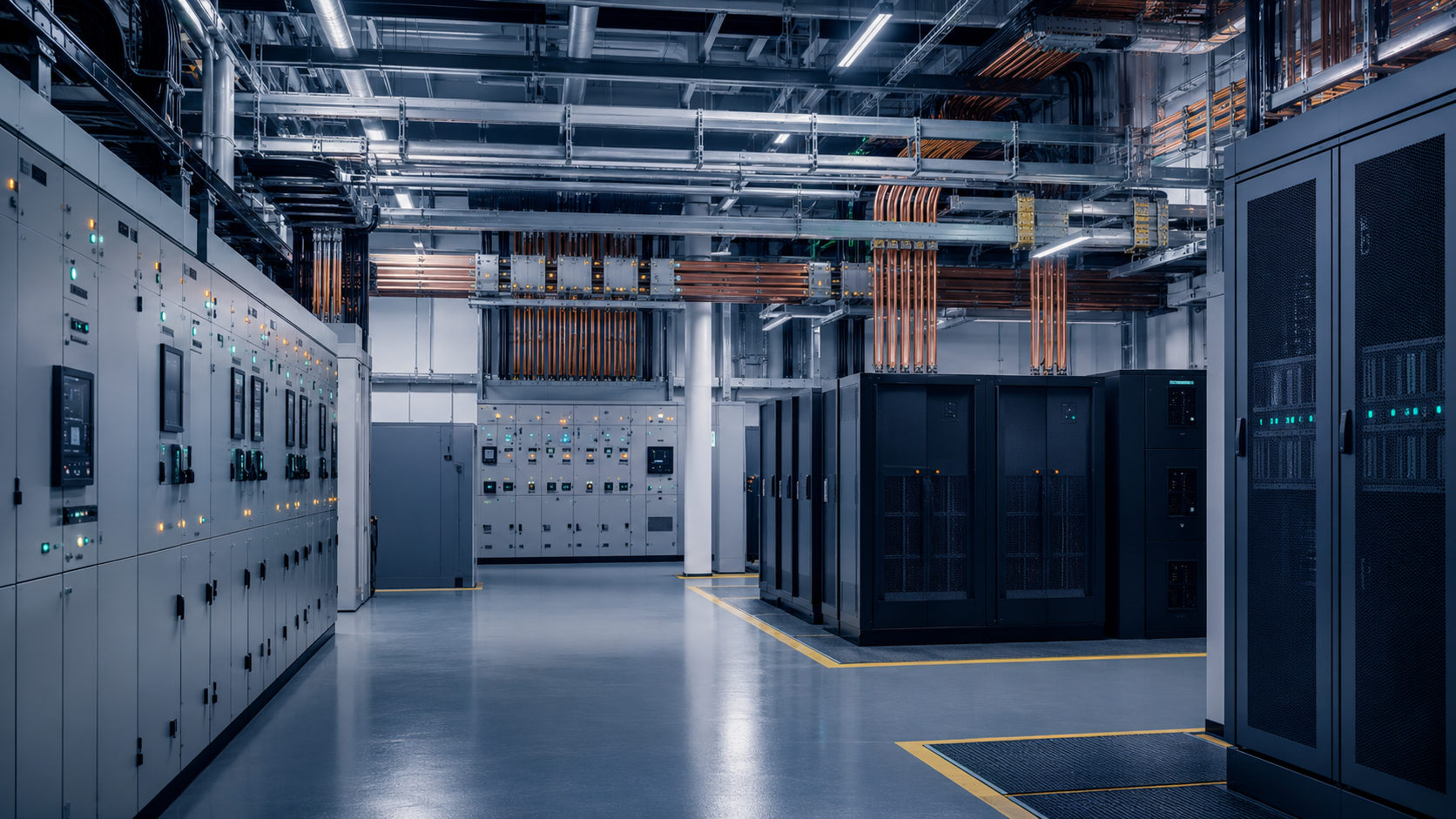
The project covers approximately 33,000m² and involves redundant electricity supply, battery systems, emergency generators, cooling equipment, ventilation, plumbing, fire protection, controls, and associated technical infrastructure. Work has begun, with completion anticipated in 2028.
Implenia describes the order value as being in the low three-digit millions, without specifying the currency in its English-language disclosure. The contractor has not identified the customer beyond describing it as a global provider of sustainable digital infrastructure.
The new contract involves the turnkey delivery and commissioning of the facility’s mechanical, electrical, and plumbing systems. It follows Implenia’s completion of the structural building work, allowing the company to continue through a technically demanding phase of construction.
The scope illustrates the difference between delivering the physical shell of a data centre and preparing it for commercial operation. A completed building cannot support computing workloads until electricity distribution, cooling, protection systems, and operational controls have been installed and verified.
Implenia has not disclosed the site’s intended IT load, rack density, grid connection capacity, or the final computing equipment configuration. Its reported floor area cannot be used to derive a reliable megawatt figure without further information about the intended design.
Electrical and mechanical integration
Power distribution is among the principal systems covered by the contract. The disclosed arrangement includes redundant supply infrastructure, batteries, and emergency generators, although Implenia has not specified the redundancy topology, the duration of stored electrical energy, or the intended generator fuel.
These details determine how a facility responds to supply interruptions and equipment failures. Batteries can maintain power during a transition or support other electrical functions, while generators may provide longer-duration supply where fuel, controls, and operating arrangements permit.
Redundancy also depends on how the equipment is connected. Installing multiple units does not automatically provide independent distribution paths or remove common points of failure. Protection systems, switching arrangements, and commissioning must be compatible with the facility’s operating requirements.
Cooling presents another set of integration challenges. Heat generated by servers and other computing equipment must be transferred to mechanical infrastructure capable of rejecting it while maintaining suitable operating temperatures. Equipment selection and control strategies depend on the loads that the facility is intended to support.
The announcement identifies high-performance cooling but does not state whether the data halls will use direct liquid cooling, conventional air systems, or a combination. No cooling capacity or expected efficiency figure has been disclosed.
Mechanical systems also depend on electrical controls and monitoring. Sensors, control equipment, and operating procedures must allow technical teams to identify faults, manage equipment sequencing, and maintain appropriate conditions during normal operation and maintenance.
Commissioning provides the opportunity to verify individual equipment performance and the behaviour of connected systems. A facility must be tested against its defined design requirements rather than assumed ready for occupation simply because the hardware has been installed.
Heat reuse and energy infrastructure
Implenia says the project includes a photovoltaic installation and a concept for recovering waste heat for district heating. Neither measure has been accompanied by a disclosed generation capacity, projected quantity of usable heat, or confirmed external heat customer.
District heating integration requires a suitable connection between the facility’s cooling equipment and a heat distribution system. The available heat temperature, distance to potential customers, seasonal demand, and required supplementary equipment influence whether a proposed arrangement can operate economically.
Where recovered heat is below the temperature required by a heating network, heat pumps may be needed to increase its usefulness. Their electricity demand must be considered alongside the environmental and commercial benefits of delivering recovered energy elsewhere.
Photovoltaics can contribute to on-site electricity supply, although their output varies with weather and daylight. The announcement does not establish that solar generation will meet any defined proportion of the data centre’s continuous electrical demand.
Implenia points to its experience with hospitals, laboratories, and other technically complex buildings as relevant to the contract. Such projects involve coordinated building systems and demanding commissioning, although the operating obligations of a data centre have to be assessed against its own design.
The Swiss project is now progressing through technical installation rather than preliminary shell construction. Its expected completion in 2028 will depend on successful integration and commissioning, while the operator’s computing capacity and customer deployment timetable have not been publicly established.

