
Summary
- IREN has secured civil works permission and grid-connected power for its proposed 300MW Badajoz development.
- The company has established IREN Europe to develop and operate regional AI infrastructure.
- Initial operations are targeted for 2028, with construction and commissioning still ahead.
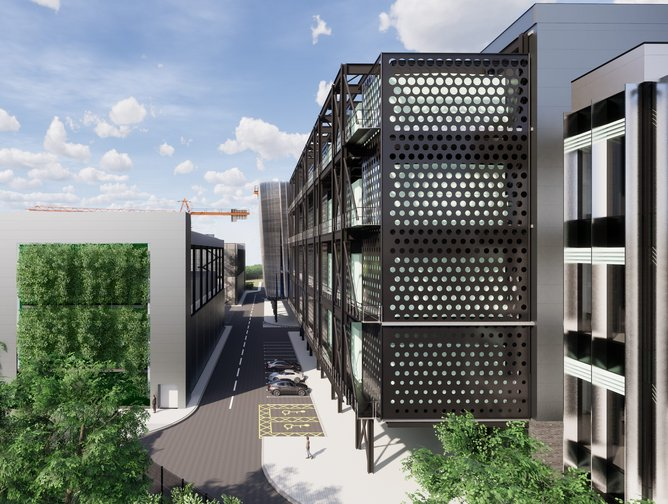
IREN has secured a civil works licence and grid-connected power for a planned 300MW AI data centre campus in Badajoz, Spain, advancing a European expansion programme targeting initial operations in 2028.
The company confirmed the development on 21 October alongside the establishment of IREN Europe, a regional business intended to develop and operate AI infrastructure and provide managed cloud services. Badajoz will be its first European project.
Located in Extremadura, close to the Portuguese border, the proposed campus is intended to serve customers requiring greater control over the geographical location and operation of their computing infrastructure. IREN has identified European data residency and operational requirements as commercial drivers of the investment.
The company has appointed Roberto Purcaro as Executive Director for Europe, with former Banco Santander chief executive Ángel Corcóstegui chairing the European board. The appointments establish a regional management structure as IREN progresses its development and commercial plans.
Securing a civil works licence provides a basis for advancing site construction, while the confirmation of grid-connected power addresses a major constraint affecting European data centre developments. However, neither establishes that 300MW of computing equipment has been installed or commissioned.
The available disclosure does not provide a detailed construction timetable for every phase of the campus. Initial operations are targeted for 2028, but the date should not be interpreted as a commitment to have the full 300MW available to customers at that point.
The planned facility will use closed-loop liquid cooling, which IREN says will require minimal cooling water. Such systems circulate coolant through an engineered circuit, transferring heat from computing equipment towards the facility’s heat rejection infrastructure.
Although a closed-loop arrangement can reduce routine water consumption compared with evaporative cooling, its overall performance depends on the heat rejection design, ambient temperatures, equipment temperatures and operating conditions. IREN has not published measured water usage effectiveness figures for the future Badajoz installation.
The campus is also being designed for compatibility with NVIDIA’s DSX AI Factory platform. That architecture brings computing infrastructure into a coordinated design process with electrical distribution, cooling and supporting facility systems.
Compatibility does not disclose the final server configuration or establish the rack densities that will operate at Badajoz. Those requirements will depend on the computing equipment selected, customer contracts and the engineering design adopted for each development phase.
Across Europe, the relationship between electrical capacity and usable computing capacity has become a central consideration in project delivery. Even where a developer has secured access to electricity, it must still complete the distribution, protection, cooling and operational infrastructure needed to make that supply available to installed equipment.
Large campuses also require substantial expenditure before customer workloads begin generating revenue. The sequence of civil construction, specialist equipment procurement, commissioning and customer occupation consequently influences both the investment requirement and the timing of commercial returns.
IREN’s European expansion creates another option in a market where governments and businesses are examining the operational and jurisdictional controls associated with AI computing. Hosting infrastructure in Europe can address geographical requirements, although individual customers may also specify contractual, security and administrative controls.
IREN plans to provide managed AI cloud services from Badajoz, extending its role beyond developing physical facilities. This will require the company to coordinate data centre operations with computing availability, network connectivity and the management of customer workloads.
The immediate milestones are now the progression of construction and confirmation of the equipment and commissioning programme for the first operating phase. The company’s 300MW target establishes the intended scale of the development, while the 2028 date defines its initial operational ambition.

