
Summary
- Nexspace has started construction of an expansion at its Graz site in Austria.
- The new four-storey building will provide around 3,000 sq m of total area and a 2.2MVA connection capacity.
- Customer availability is targeted for September 2027 as Nexspace expands its regional DACH colocation network.
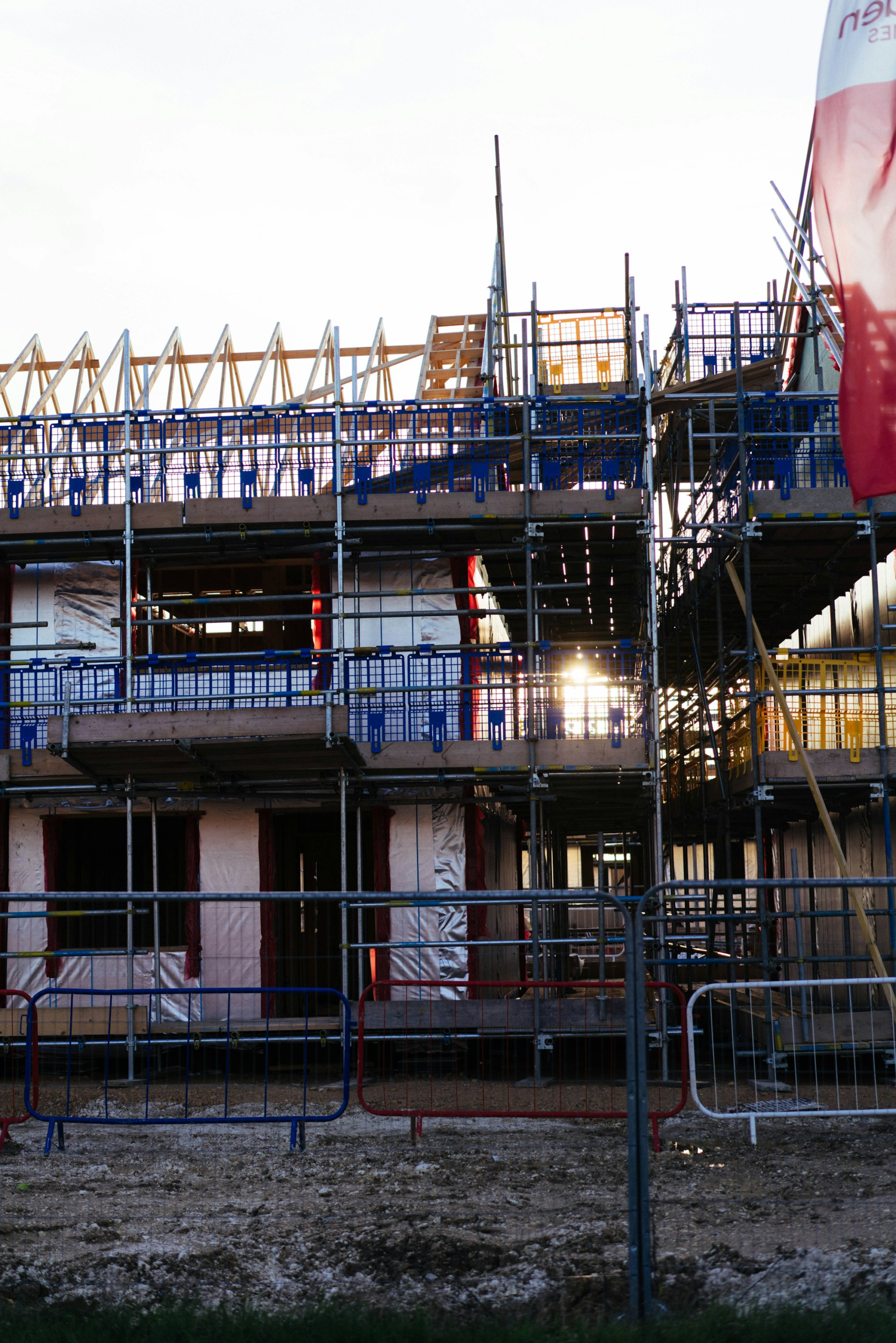
Nexspace has broken ground on an expansion of its data centre operation in Graz, Austria, adding another regional facility to the company’s DACH colocation portfolio.
The project will add a four-storey building with approximately 3,000 sq m of total floor area at the company’s existing Graz location. Nexspace’s primary project announcement gives the electrical connection figure as 2.2MVA, and the new capacity is expected to be available to customers from September 2027.
Secondary reporting has described the development as adding roughly 600 sq m of IT space and approximately 240 racks. The expansion is intended to roughly double Nexspace’s existing computing capacity in Graz.
The distinction between MVA and MW is worth retaining. MVA describes apparent electrical power and cannot automatically be treated as an identical amount of real power in megawatts without knowing the facility’s power factor. The primary project source therefore provides the more technically defensible measure for the incoming connection.
Nexspace already operates in Graz and is expanding rather than establishing a completely new market position. Its existing local data centre was acquired after being developed by COOLtec and has supported telecommunications infrastructure including Magenta Telekom.
Regional capacity rather than hyperscale
The new building is small by hyperscale standards, but that is consistent with Nexspace’s strategy. The operator focuses on regional facilities serving enterprises, public-sector organisations, critical-infrastructure users, AI and cloud customers across Germany and Austria.
That type of development occupies a different part of the market from 100MW-plus campuses. Customers may prioritise geographic proximity, lower-latency access, local support, and the ability to place owned equipment in professionally operated space without moving workloads to a distant hyperscale hub.
Graz also provides a regional economic base rather than simply acting as overflow from Vienna or Frankfurt. Styria has industrial, research, automotive, semiconductor, and technology activity that can create demand for locally hosted compute and connectivity.
The physical delivery challenge is correspondingly compact but still mission critical. A 2.2MVA connection has to be translated through transformers, switchgear, UPS systems, distribution, backup arrangements, and cooling before customer racks can be commissioned. The 3,000 sq m gross building figure also includes significantly more than white space, reflecting the plant and support areas required around the IT halls.
Nexspace has linked the expansion to rising requirements from AI workloads, but the company has not published rack-density targets or a cooling specification for the new building. Those details will determine how much of the additional electrical capacity can support high-density equipment and whether the facility will need liquid-cooling infrastructure.
The September 2027 target leaves around a year for structural work, MEP installation, utility connection, controls integration, testing, and commissioning. For a regional facility, keeping those elements aligned can be more important than the headline building size because delays to one electrical or mechanical package can prevent the entire hall from being handed over.
Nexspace is also pursuing additional growth in Stuttgart, reinforcing a model built around multiple DACH metropolitan markets rather than a single very large campus. Graz will provide another test of whether regional enterprise and AI demand can support incremental capacity away from Europe’s biggest colocation hubs.
The groundbreaking puts the Austrian project beyond the planning-and-pipeline stage. Its next milestones will be enclosure of the new building, energisation of the 2.2MVA connection, completion of cooling and resilience systems, and commissioning ahead of the September 2027 customer date.

