
Summary
- Madrone has attracted a reported $500,000 in early-stage investment.
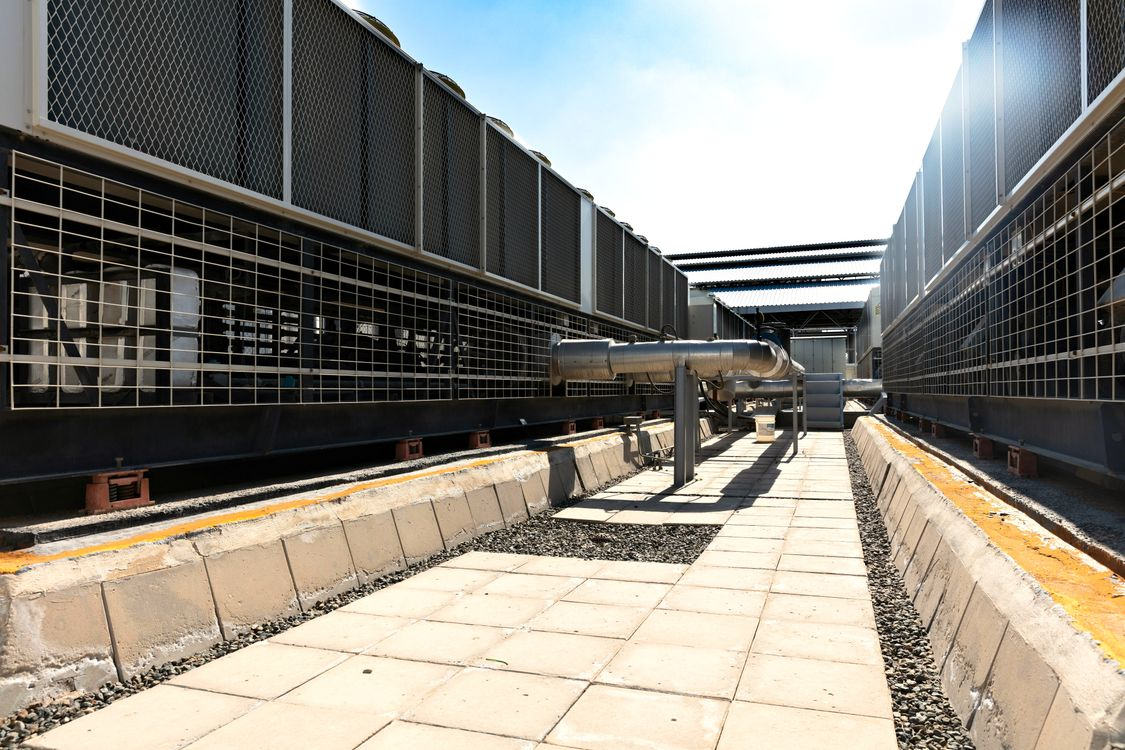
- Its proposed external cooling equipment uses a dew point cooling approach to supply facility water.
- Development has progressed to a 100kW demonstrator, but commercial-scale performance remains unverified.
US cooling technology developer Madrone has attracted investment from Nvidia, Y Combinator, and Tekedia Capital as it develops equipment designed to supply cooled water to data centres without conventional mechanical refrigeration.
The financing, reported to total $500,000, will support the development of modular cooling equipment intended for installation outside computing facilities.
Tekedia Capital confirmed its participation alongside Nvidia on 24 November, although its disclosure did not specify the total amount invested.
Madrone was founded by Akshay Trikha and Erik Meike and has participated in Y Combinator’s development programme. The company has been working on equipment using dew point cooling, including a 100kW demonstrator.
Its proposed system would supply cooled facility water to mechanical infrastructure serving computing equipment, reducing reliance on conventional chiller installations.
Madrone estimates that its technology could reduce cooling electricity and water consumption by 30% compared with conventional chiller and cooling tower arrangements under conditions found in Texas.
The company has not published independently verified commercial-scale operating results demonstrating those savings.
Ambient conditions determine cooling performance
Mechanical chillers remove heat from circulating fluids through a refrigeration cycle, requiring electricity to operate compressors and associated equipment.
The amount of electricity consumed depends on the thermal load, required coolant temperature, ambient conditions, and performance characteristics of the refrigeration installation.
Alternative cooling architectures can reduce dependence on mechanical refrigeration where the required temperatures can be achieved through other heat rejection processes.
Dry cooling systems transfer heat to surrounding air, while evaporative cooling equipment uses the evaporation of water to reduce temperatures below those achievable through conventional dry heat rejection alone.
Dew point cooling approaches use heat exchange and evaporation to approach lower temperature limits without relying entirely on mechanical compression.
The performance achievable through such systems depends on both ambient air temperature and humidity. Atmospheric conditions influence the difference between the surrounding air temperature and the theoretical minimum temperatures available through evaporative processes.
Consequently, equipment developed and evaluated under one set of climatic conditions may deliver different operating results elsewhere.
Madrone’s focus on conditions found in Texas provides a geographical basis for its performance claims, but does not establish how the proposed equipment would operate during periods of elevated humidity or across different European climates.
Further technical information is required to determine its coolant temperature range, auxiliary electrical consumption, water treatment requirements, and performance under varying thermal loads.
Electrical savings could release capacity for computing
Reducing the electricity required by cooling equipment could allow a greater proportion of a data centre’s existing electrical capacity to be allocated to computing systems.
That opportunity is particularly relevant where facilities face restrictions on the availability of additional grid capacity or would require substantial infrastructure reinforcement to support expansion.
However, additional computing equipment must also be accommodated within the facility’s electrical distribution, coolant delivery, networking, and physical rack infrastructure.
Reducing consumption within one part of the mechanical installation therefore does not automatically create an equivalent amount of usable IT capacity.
Madrone’s proposed modular configuration could potentially support installation alongside new computing buildings or retrofits of existing facilities.
Introducing alternative cooling equipment into an operating data centre would require compatibility with the existing mechanical infrastructure, including coolant temperatures, circulation rates, control systems, maintenance arrangements, and backup cooling provisions.
European environmental performance requirements also increase the importance of assessing complete cooling installations against both electricity and water consumption.
Developers comparing different heat rejection technologies must establish whether savings achieved under particular operating conditions can be maintained across the full range of expected computing loads and local weather conditions.
The latest investment provides Madrone with additional resources to develop its equipment beyond the current demonstrator.
Scaling the technology to commercial data centre installations will require further engineering work and evidence of sustained performance, reliability, and integration with established mechanical infrastructure. The resulting operating data will determine whether its projected savings can be achieved at the thermal loads and availability requirements of large computing facilities.

