
Summary
- The reference design supports Nvidia GB300 NVL72 and GB200 computing systems.
- Electrical and thermal infrastructure is integrated within an EN 50600 Availability Class 3 design approach.
- The blueprint is an engineering specification rather than an operational data centre.
Siemens, STULZ, and Nvidia have developed a 100MW hyperscale AI data centre reference architecture combining electrical distribution, liquid and air cooling, automation, and safety infrastructure.
The design targets facilities using Nvidia GB300 NVL72 systems while accommodating GB200 deployments. It provides a common engineering framework for major facility systems rather than identifying a particular development site or operational installation.
Intended for markets using International Electrotechnical Commission standards, the architecture follows an approach aligned with EN 50600 Availability Class 3, which addresses concurrent maintainability.
Siemens contributes electrical infrastructure, power quality monitoring, automation, and building safety technology. STULZ supplies the cooling architecture, while Nvidia’s computing equipment and management systems establish the requirements of the intended AI workload.
The companies describe the approach as a Grid-to-GPU architecture, linking the electricity supply path to the computing hardware consuming power inside the facility.
The coordination is important because high-density AI systems place increasingly specific demands on rack-level electrical distribution, thermal management, and operational controls.
Different parts of a data centre can be engineered to meet individual equipment requirements while still creating difficulties when connected together. Electrical capacity, cooling equipment, control systems, and the intended computing installation must ultimately operate as one facility.
For high-density racks, the electrical distribution arrangement needs to deliver substantial power while allowing equipment to be maintained and faults to be isolated without unnecessary interruption to operating systems.
Power quality also becomes an engineering consideration as large quantities of power electronics connect servers and supporting equipment to the facility electrical network.
Harmonics, voltage behaviour, protection coordination, and the effects of changing loads must be addressed through equipment specification and commissioning.
Siemens’ contribution includes industrial electrical equipment, infrastructure management, automation, and power quality metering intended to support those requirements.
The design also integrates fire safety and leak detection systems, which address different operational risks associated with electrical equipment and coolant distribution.
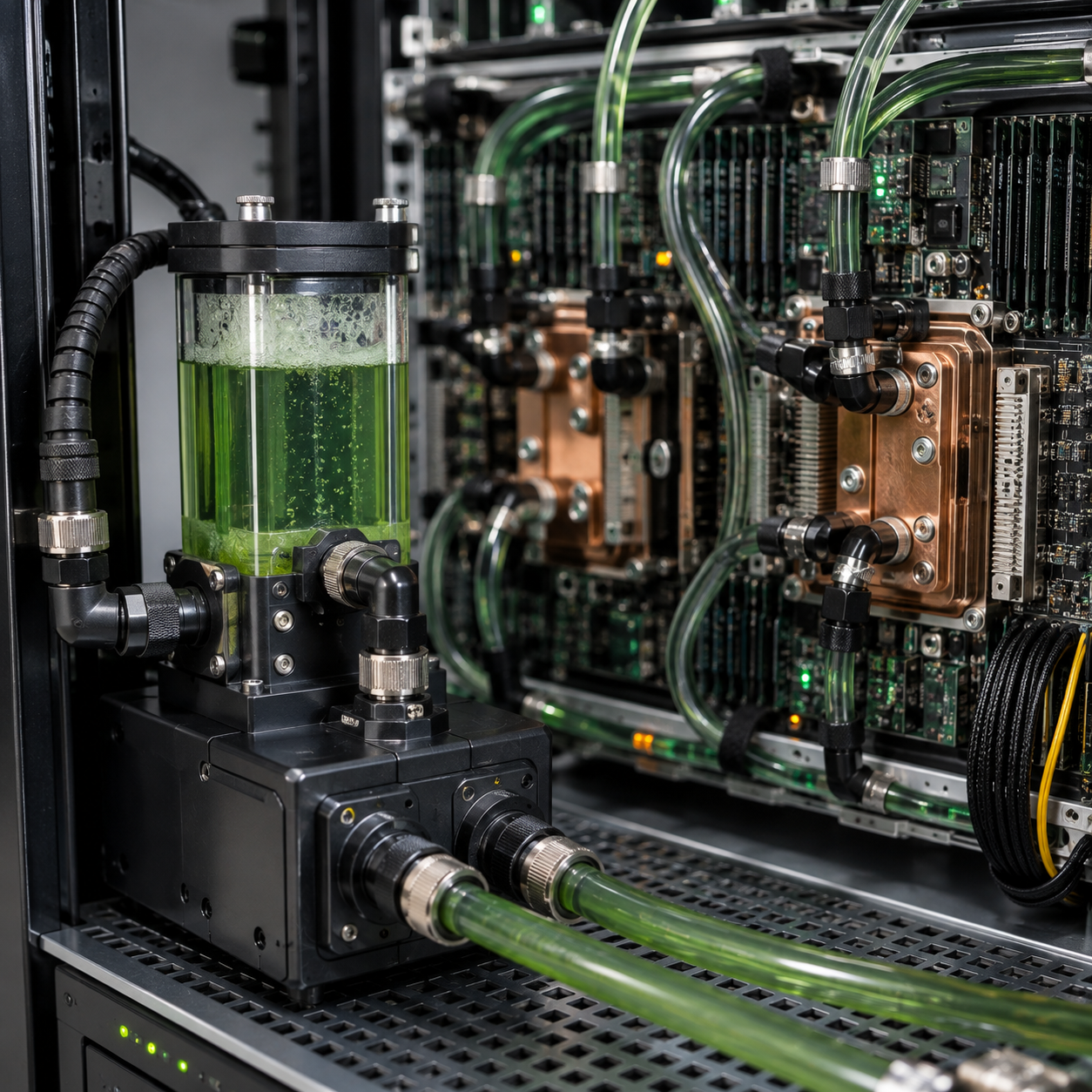
Thermal management combines direct liquid cooling with air cooling. The liquid circuit removes a substantial portion of the heat produced by the computing hardware, while air systems address residual heat and components that are not connected to the liquid cooling system.
STULZ CyberCool cooling distribution units form part of the liquid cooling arrangement, providing interfaces between the facility cooling infrastructure and the circuits serving high-density server racks.
Effective operation depends on more than selecting equipment with sufficient nominal capacity. Coolant temperature, flow, pressure, redundancy, maintenance access, and the characteristics of the computing workload influence the final configuration.
The heat collected from servers must still be transferred to equipment capable of rejecting it outside the data hall. The appropriate arrangement will depend on local climatic conditions, water availability, energy objectives, and the operating conditions assumed in the design.
Concurrent maintainability introduces another requirement. Under the intended availability approach, critical infrastructure must be arranged so that planned maintenance can proceed without interrupting the overall service.
That objective depends on the complete installed system rather than the presence of individual redundant components. Distribution paths, isolation arrangements, control behaviour, maintenance access, and plant capacity all need to be considered together.
Integrating the electrical and mechanical requirements at the reference design stage can reduce unresolved interfaces between equipment suppliers, consulting engineers, contractors, and operators.
It can also make the assumptions underlying the design easier to identify before a developer commits to construction and equipment procurement.
However, a reference architecture cannot eliminate local engineering requirements. Grid connection voltage, building layout, equipment availability, planning restrictions, environmental conditions, and customer service obligations still influence the final installation.
The 100MW figure describes the scale of the reference design. It does not establish that the same capacity has been contracted, connected, constructed, or commissioned at any location.
DataCentral previously examined Nvidia’s broader work on coordinating AI power demand and cooling.
The joint blueprint provides a defined infrastructure configuration bringing together the computing equipment and several critical supporting systems.
Its practical performance will depend on how developers adapt and implement the architecture, and whether the installed systems meet their intended requirements during commissioning, maintenance, and changing computing loads.

