
Summary
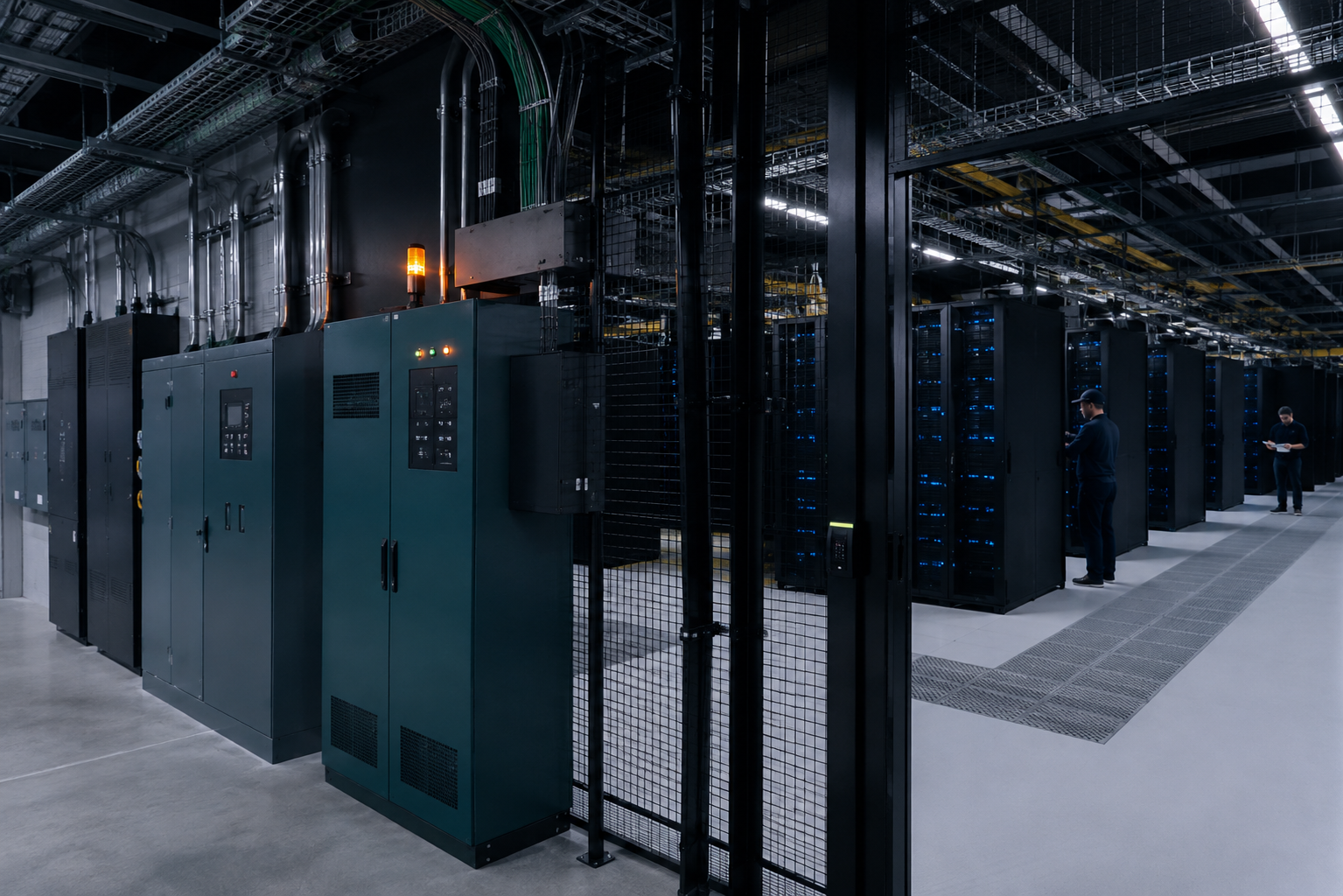
- Planetel has inaugurated TERRA-1 in Padua, with its latest disclosure specifying 1MW of eventual capacity and space for up to 120 racks.
- The facility combines colocation, cloud infrastructure, network connectivity and immersion cooling within a refurbished industrial building.
- Customer migrations begin in December 2026, with full commercial operation and the first investment returns expected in 2027.
Planetel has inaugurated TERRA-1, an edge data centre in Padua, Italy, completing a major development milestone ahead of customer migrations scheduled to begin in December.
The facility forms part of the Planetel HUB, developed through the acquisition and refurbishment of an existing industrial building in the city’s eastern industrial district. The wider investment amounts to approximately €7m and combines data centre infrastructure with the telecommunications company’s established regional connectivity services.
Planetel’s latest disclosure specifies approximately 1,200m² of floor space, capacity for up to 120 racks and 1MW of capacity when the facility reaches full operation. Earlier company information referred to a larger 1.5MW figure, making the updated specification the appropriate basis for the inauguration coverage.
The opening took place on 18 November as part of the TERRA FERMA event, with visits scheduled to continue through 20 November. Planetel expects customers to begin moving services into the facility in December, followed by progressive commissioning and full operation during 2027.
TERRA-1 is intended to provide colocation, cloud infrastructure, disaster recovery, backup services and managed IT capabilities. Its design includes conventional hosting infrastructure alongside immersion cooling for selected high-density computing equipment.
The facility will also allow Planetel to consolidate services currently distributed across other data centres. That migration programme will determine how quickly the new building becomes an operational service platform rather than simply a completed physical asset.
Network integration supports regional hosting
Planetel is connecting TERRA-1 to its existing fibre network, including direct connectivity with the VSIX internet exchange in Padua and MIX in Milan. These interconnection arrangements are intended to support local hosting services and provide access to wider telecommunications networks.
Regional data centres operate on a different scale from hyperscale campuses. Their commercial role can depend on proximity to business customers, network availability, local technical support and the ability to provide hosting services without requiring organisations to maintain their own facilities.
Physical proximity can reduce the distance information needs to travel, but the performance of an application also depends on routing, network congestion, processing time and the location of supporting services.
Direct connections to internet exchanges can provide additional routing options. The quality and resilience of those connections depend on how the network is configured, whether diverse paths are available and the agreements in place with other network operators.
Planetel already supplies telecommunications and IT services across parts of northern Italy. TERRA-1 extends that model by providing a physical location for computing equipment, storage systems and infrastructure services delivered over its network.
For customers using colocation, Planetel will provide the supporting data centre environment while organisations retain responsibility for some or all of their installed hardware. Managed cloud and infrastructure services involve different arrangements, with more operational responsibility transferred to the provider.
Those distinctions influence equipment maintenance, security, service availability and recovery requirements. A colocation customer may control its own servers while depending on the data centre operator for electricity, cooling, physical access and building systems.
The proposed consolidation of services introduces additional requirements. Moving production workloads can involve transferring data, reconfiguring network connections and testing applications against their new infrastructure environment.
Some services may require temporary operation across both the existing and replacement locations. Data replication, recovery procedures and controlled migration windows become important where business applications cannot tolerate prolonged interruption.
Immersion cooling introduces a different thermal design
TERRA-1 includes immersion cooling technology intended for computing equipment with relatively high thermal loads. Compatible electronic components are placed within an electrically insulating fluid that absorbs heat from their surfaces.
Heat must subsequently be transferred out of the immersion system and rejected through the facility’s wider thermal infrastructure. This requires appropriate heat exchange equipment, fluid handling arrangements and operating controls.
The technology can reduce the need for conventional server cooling fans in supported equipment configurations. However, it does not remove every source of cooling electricity consumption, because pumps and heat rejection equipment may still be necessary.
Planetel cites a power usage effectiveness figure of approximately 1.03 to 1.05 for the immersion cooling configuration and estimates that the overall data centre will achieve PUE below 1.23.
These figures are company performance claims and design expectations rather than independently verified annual measurements from a fully operational facility. Their interpretation also depends on the measurement boundary, because an assessment covering only selected equipment cannot necessarily be compared directly with a whole-building PUE figure.
Operating performance will depend on computing utilisation, thermal conditions, supporting plant and the proportion of equipment using immersion cooling rather than conventional systems.
The company also plans rooftop solar generation. The published information does not establish the system’s expected annual electricity output or the proportion of the facility’s total energy demand that will be supplied by on-site generation.
Refurbishing an industrial building has allowed Planetel to reuse an existing site and supporting infrastructure. The approach reduces the need for new land development, although electrical, cooling, structural and resilience requirements still determine whether the completed facility is suitable for continuous computing operations.
The company has previously outlined the project in its development plans. DataCentral reported its planned November opening in October, when construction was approaching completion and the company was preparing the facility for commercial service.
The inauguration confirms that the project has reached its next physical milestone. Customer migrations, commissioning and the gradual occupation of its available rack capacity will determine how quickly the investment begins supporting production workloads during 2027.

