
Summary
- CTS has inaugurated its first 20,000m² manufacturing building in Viana do Castelo, with approximately 250 people employed.
- Construction has begun on a further 17,000m² building, expanding the proposed production footprint to approximately 37,000m².
- The group targets eventual annual production of 900 electrical power modules and further development of cooling equipment manufacturing.
CTS Group has inaugurated an electrical infrastructure factory in Viana do Castelo, Portugal, and begun work on a second manufacturing building as it expands production of prefabricated equipment for European data centres.
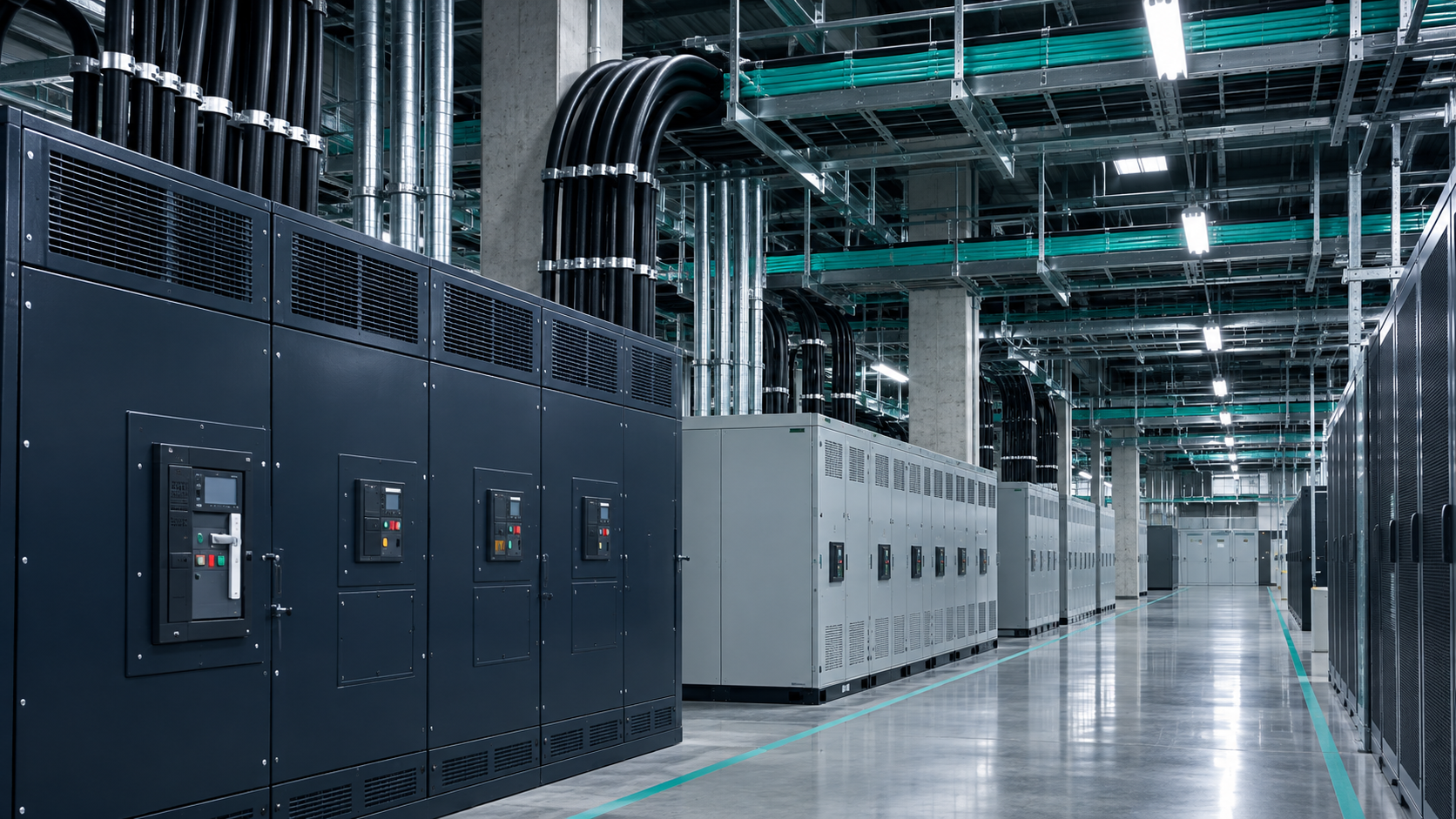
The first factory, developed through the group’s NordicEPOD business with electrical equipment manufacturer Eaton, represents an investment of approximately €50m. Production began during the summer, ahead of the formal inauguration on 19 November, and the facility currently employs approximately 250 people.
Construction has also begun on a second building covering approximately 17,000m². Together with the existing factory, which occupies around 20,000m², the expansion will provide approximately 37,000m² of manufacturing space within a larger industrial campus.
CTS intends to increase employment at the initial facility to approximately 700 people as production develops. Its longer-term ambition is to support around 2,000 direct jobs across the expanded complex, although that figure remains dependent on further investment, manufacturing demand and the completion of additional facilities.
The company has also outlined an eventual annual production target of 900 electrical power distribution modules, known as ePODs. That would double the 450-unit capacity associated with an earlier phase of the investment, but the larger figure represents planned manufacturing output rather than equipment already being produced.
CTS is extending the campus beyond electrical infrastructure. It has partnered with cooling manufacturer Daikin on thermal equipment, including a customised coolant distribution unit scheduled for introduction in 2027. Production at the additional factory is expected to develop towards the end of 2027 or the beginning of 2028.
Electrical modules move construction into the factory
Prefabricated electrical power modules allow substantial parts of a data centre’s distribution infrastructure to be assembled and tested before delivery to the construction site. Depending on their configuration, these assemblies can incorporate transformers, switchgear, protection equipment, controls and connections needed to distribute electricity to computing systems.
The approach changes the construction sequence. Electrical work that would otherwise take place alongside structural, mechanical and cabling activities can be completed within a controlled manufacturing environment, potentially reducing congestion and the amount of installation work required on site.
Factory assembly also creates opportunities for standardisation across facilities using similar electrical designs. Repeated configurations can simplify production and quality assurance, although modules must still meet the specific electrical and operational requirements of each development.
Technical validation remains necessary after delivery. Equipment must be connected to the site’s electrical network, tested against the intended protection arrangements and integrated with the systems responsible for controlling and monitoring power distribution.
A factory acceptance test verifies selected functions before shipment. It does not establish that the completed installation will perform correctly once connected to the wider electrical infrastructure, particularly where transformers, standby generation, UPS equipment and distribution systems must operate together.
Transport introduces further design considerations. Module dimensions, weight, lifting points and installation access need to be established before fabrication, particularly where equipment is destined for restricted construction sites or existing data centres undergoing expansion.
The Portuguese operation has geographical advantages for exporting large prefabricated assemblies. Its proximity to the port of Viana do Castelo and major road connections supports the movement of substantial electrical equipment towards European construction markets.
NordicEPOD’s manufacturing activities form part of a wider CTS industrial network. The group operates engineering, construction and equipment businesses serving data centre projects across several European countries, combining design and installation services with the manufacture of selected infrastructure components.
Cooling production adds another engineering discipline
The planned expansion introduces further mechanical manufacturing capabilities, including equipment for liquid cooling installations. Higher-density computing systems require cooling arrangements capable of transferring substantial heat loads without exceeding the temperature and flow conditions specified by hardware manufacturers.
Coolant distribution units provide an interface between the technology cooling circuits serving computing equipment and the wider facility cooling system. They typically incorporate heat exchange equipment, pumps, controls and components needed to maintain appropriate operating conditions.
Integrating these units into prefabricated assemblies can reduce some installation activities, but the equipment must still be matched to the facility’s thermal design. Heat rejection capacity, coolant compatibility, pressure requirements and maintenance access influence whether a particular configuration is suitable.
CTS and Daikin’s planned product will therefore need to be assessed against its eventual technical specifications rather than the general advantages associated with modular construction. A commercial launch in 2027 would not, by itself, establish installed customer capacity or measured efficiency improvements.
Electrical and cooling manufacturing also depend on different supply chains. Transformers, switchgear and power electronics have distinct procurement requirements from pumps, heat exchangers, controls and fluid-system components, making delivery coordination important across the expanded campus.
The company’s financial ambitions are substantial. CTS has indicated that annual revenue from the industrial complex could eventually approach €2bn after the planned development phases. The projection depends on manufacturing capacity being completed and sufficiently utilised, and should not be confused with current turnover.
At present, the confirmed operational development is the inauguration of the first factory, where electrical module production is under way. The second building, expanded employment, increased annual output and additional cooling equipment remain future delivery milestones tied to investment, orders and the development of the European data centre supply chain.

