
Summary
- Vertiv plans around 22,000 square metres of additional manufacturing space at Nové Mesto nad Váhom.
- New capacity will cover power systems, switchgear, thermal management, and high-density liquid cooling.
- The 18-to-24-month project adds European manufacturing capacity to a supply chain facing higher AI infrastructure demand.
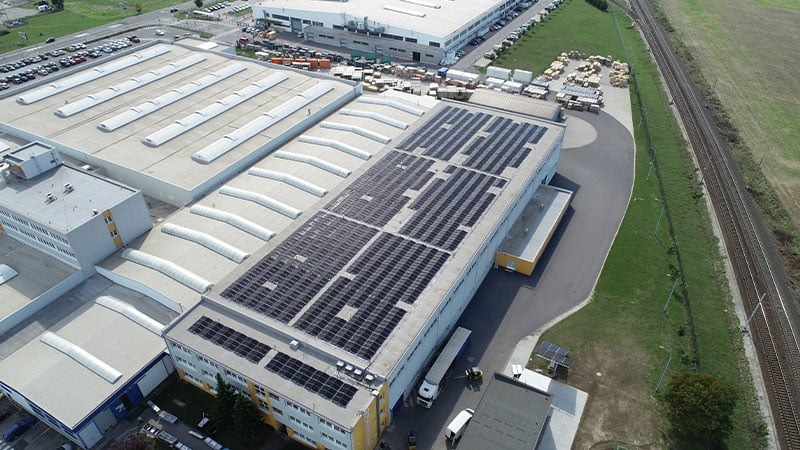
Vertiv is expanding its Nové Mesto nad Váhom manufacturing campus in Slovakia by approximately 22,000 square metres, increasing European production capacity for data centre power and thermal-management equipment.
The expansion is planned over the next 18 to 24 months and will increase output across power systems, switchgear, and thermal-management technologies. Vertiv said the additional capacity will include equipment for high-density artificial intelligence and high-performance computing environments, where electrical and cooling systems are increasingly being designed as tightly coupled infrastructure rather than separate facility packages.
Nové Mesto nad Váhom is already one of Vertiv’s established European manufacturing sites. The location supports AC and DC power equipment as well as thermal-management products, and the company is seeking to develop the enlarged site into a more integrated manufacturing and technology campus combining production, engineering, and operational capabilities.
The investment puts another part of the AI data centre build-out upstream of the facility itself. New campuses require large quantities of switchgear, uninterruptible power equipment, thermal systems, and increasingly liquid-cooling hardware before racks can be energised. Expanding manufacturing capacity does not remove grid or planning constraints, but it can reduce another source of delay once projects move into procurement and construction.
Vertiv has said the Slovak project forms part of a wider manufacturing expansion that has also included investment in Ireland, Italy, Croatia, Malaysia, Mexico, and the United States. The geographic spread reflects an equipment market in which operators and contractors are putting greater weight on manufacturing availability, regional supply chains, factory testing, and predictable delivery programmes.
Liquid cooling is adding a further layer to that requirement. High-density accelerated computing changes not only the equipment installed within the data hall, but also the volume and specification of pumps, heat exchangers, coolant distribution equipment, controls, pipework, and supporting electrical infrastructure required around it. Those systems need to arrive in coordinated programmes if operators are to avoid shifting delays from the utility connection to mechanical and electrical fit-out.
The Slovak campus expansion also illustrates the industrial footprint developing around Europe’s data centre market. Capacity announcements tend to be measured in megawatts, but delivering those megawatts requires manufacturing capacity well beyond servers themselves. Switchgear, power distribution, cooling equipment, controls, and prefabricated infrastructure are increasingly part of the same capacity equation.
Vertiv expects the enlarged plant to improve responsiveness to customised requirements and strengthen the resilience of its EMEA supply chain. That becomes more relevant as operators standardise larger portions of campus design while still requiring adaptations for local grid conditions, cooling approaches, climate, redundancy targets, and building layouts.
The 18-to-24-month construction programme means the additional manufacturing capacity will arrive against a European development pipeline that is already placing pressure on power equipment and thermal infrastructure. The physical availability of those systems will remain one of the practical tests of how quickly announced AI capacity can move from planning documents into commissioned data halls.

