
Summary
- Portugal is finalising legislation requiring renewable electricity and stronger water safeguards.
- Developers may need cooling arrangements that avoid competing with existing freshwater users.
- Detailed compliance obligations remain subject to adoption of the proposed decree.
Portugal is preparing new rules requiring data centres to use renewable electricity and demonstrate that their cooling arrangements will not compromise water supplies for households, businesses, or other economic activities.
Environment and Energy Minister Maria da Graça Carvalho outlined the proposals on 3 November as the government finalises a decree governing new data centre developments. The framework would combine electricity procurement requirements with restrictions on water consumption and more demanding environmental assessment.
The measures are being developed as Portugal’s data centre pipeline exceeds 2.6GW, including the proposed 1.2GW Start Campus development at Sines. Much of that capacity remains in development, so the pipeline figure does not represent electricity demand from facilities already operating.
Carvalho said operators would need cooling systems that do not require freshwater or access to alternative supplies that avoid competition with existing users. The government is also preparing requirements concerning electricity network capacity and the availability of renewable generation.
Data centres would be allowed to purchase renewable electricity from utilities rather than generating all the required power themselves. That provision would leave operators with different procurement options while making the sourcing of renewable electricity part of the development assessment.
The legislation has not yet been adopted, and detailed compliance thresholds remain to be established through the final decree.
Cooling design will be central to the proposed requirements because large computing facilities can use water in substantially different ways. Evaporative cooling can reduce mechanical refrigeration demand under suitable conditions, but it consumes water through evaporation and requires treatment and replenishment.
Air-cooled equipment reduces direct water consumption associated with heat rejection, although it can change electrical requirements during warmer conditions. Hybrid arrangements attempt to balance these requirements by operating differently as ambient conditions and heat loads change.
Liquid cooling introduces another distinction. Circulating coolant through servers or rack-level equipment does not necessarily mean a facility consumes large quantities of water. Consumption depends on how the collected heat is ultimately rejected, including whether external equipment relies on evaporation, dry cooling, or another arrangement.
The suitability of a development therefore depends on its complete thermal architecture rather than the presence of liquid cooling alone. Developers would need to demonstrate how their systems operate under local environmental conditions and whether sufficient cooling capacity remains available during periods of high outdoor temperature.
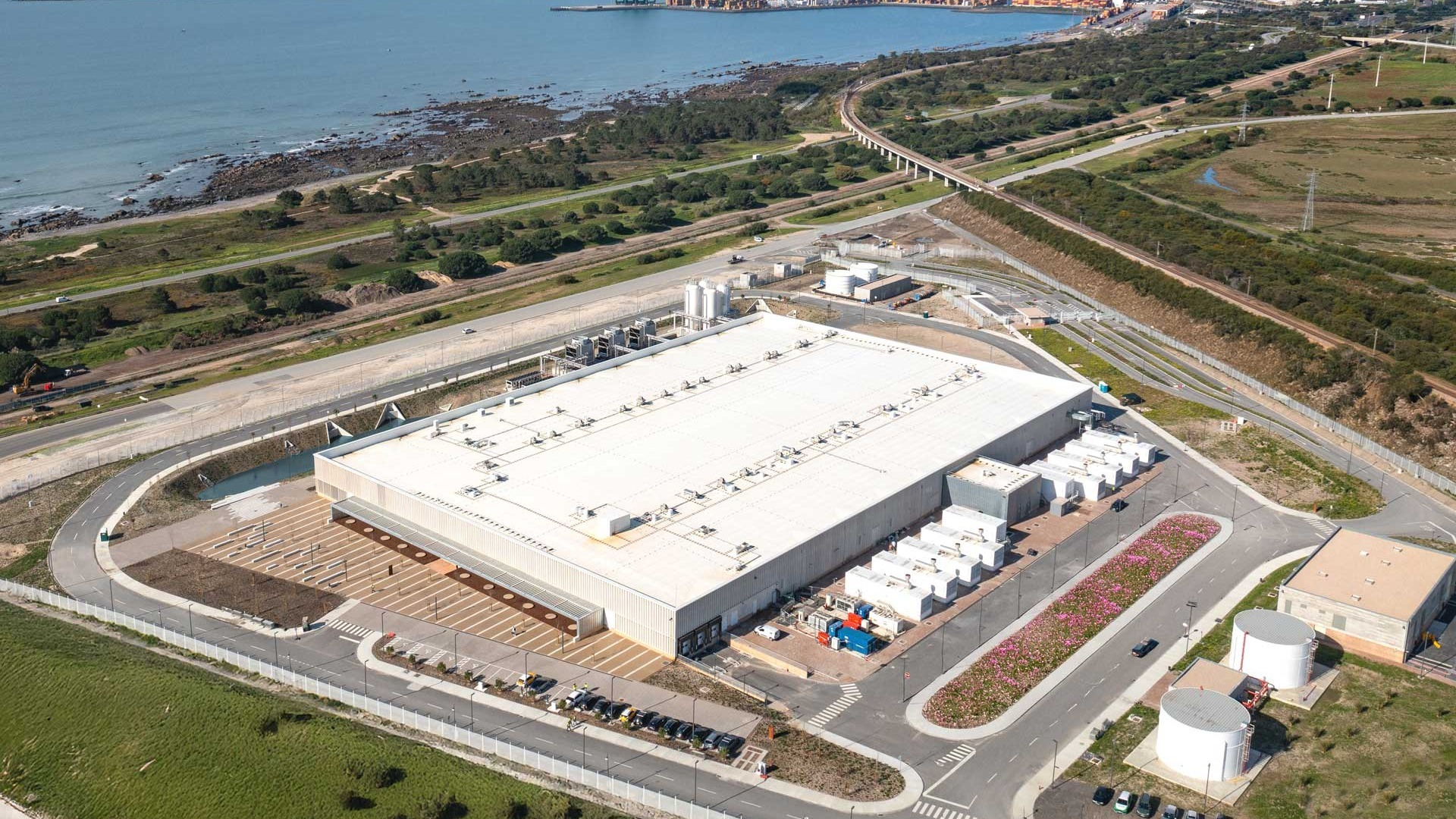
Start Campus provides an example of an alternative water strategy. The Sines project uses seawater cooling and renewable electricity, with one of its six planned buildings already operating. Its configuration illustrates how proximity to an appropriate water source can influence facility design.
Other locations may not have access to comparable infrastructure. Where alternative water supplies are unavailable or unsuitable, developers may need to place greater emphasis on dry cooling or hybrid arrangements.
Those decisions affect capital expenditure, mechanical equipment selection, land requirements, and the electricity needed to operate supporting plant. They can also change the relationship between a facility’s maximum cooling requirement and its expected annual energy consumption.
The renewable electricity requirement introduces a separate constraint. Power purchase agreements can support a developer’s procurement strategy, but contracted renewable generation is different from having a grid connection capable of delivering electricity to the proposed site.
Developers must therefore consider the source of the electricity, the network infrastructure carrying it, and the operational arrangements governing a facility’s consumption. A project could satisfy one requirement while still facing delays or additional investment associated with another.
Environmental approval also depends on local circumstances. A cooling system appropriate for a coastal industrial development may be unsuitable for an inland site where water resources, available land, or surrounding infrastructure differ substantially.
European water authorities have increasingly called for water availability to become a binding consideration when assessing new digital infrastructure. The association EurEau recently urged stronger safeguards for data centre water use, including greater consideration of local supply conditions.
Portugal’s proposed framework would bring resource availability more directly into the assessment of new developments. Cooling technology and renewable electricity procurement could become determining elements of a project’s feasibility before construction begins.
The government expects to complete the decree during 2026. The final provisions and their application to individual projects will determine how strongly they affect Portugal’s expanding data centre development pipeline.

