
Summary
- Schneider Electric and GIGABYTE are developing a joint reference architecture built around NVIDIA Vera Rubin NVL72.
- The proposed design combines computing, networking, POD management, power infrastructure, and liquid cooling.
- No operational customer installation, confirmed capacity, or construction timetable has been disclosed.
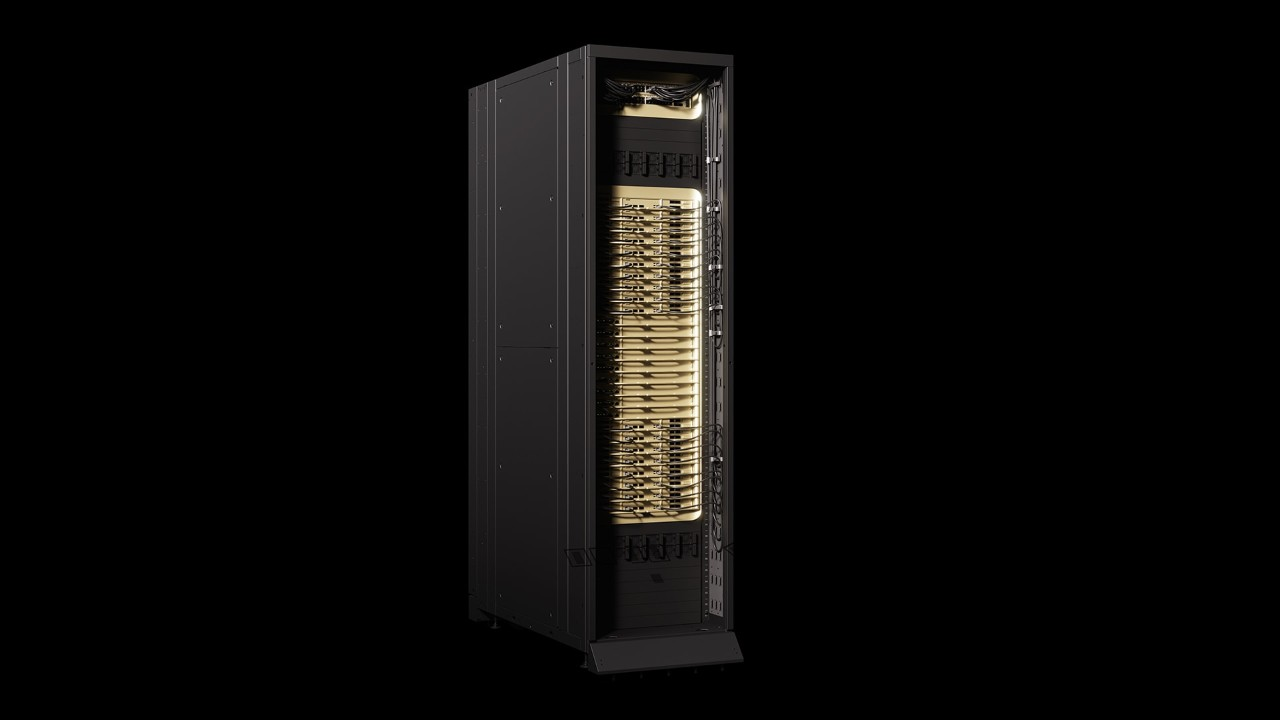
Schneider Electric and Giga Computing, a subsidiary of GIGABYTE, are developing a reference architecture that combines NVIDIA Vera Rubin NVL72 computing systems with electrical distribution, liquid cooling, networking, and facility management infrastructure.
The collaboration, detailed on 13 November ahead of the SC26 supercomputing conference, aims to coordinate the design of high-density computing installations and their supporting building services before equipment is deployed.
GIGABYTE will contribute its computing and networking platforms, together with GIGABYTE POD Manager software for supervising groups of systems. Schneider Electric will provide expertise in electrical infrastructure, liquid and hybrid cooling, data centre design, facility software, and associated engineering services.
The companies are developing what they describe as a repeatable architecture, organised around defined infrastructure units that could be expanded as computing requirements increase. No standard unit capacity, final equipment specification, or confirmed deployment date has been published.
The arrangement remains a design collaboration rather than an operational installation. Neither company has identified a customer using the complete architecture or disclosed a facility in which the combined systems have been commissioned.
Its technical scope reflects the growing interdependence of computing equipment and the systems supporting it. High-density processor installations require electrical and thermal infrastructure designed around the equipment’s operating requirements, rather than assumptions based solely on conventional rack dimensions or data hall floor area.
Those requirements influence the selection of power distribution equipment, coolant distribution units, pipework, network connections, monitoring systems, and maintenance arrangements.
Linking computing and facility infrastructure
GIGABYTE’s contribution covers the computing systems themselves, their network connections, and software for coordinating operations across groups of racks.
Schneider Electric’s responsibilities extend into the infrastructure supplying those systems with electricity and removing the heat generated during operation. Its portfolio includes electrical distribution, liquid cooling, hybrid cooling, facility management software, and engineering support.
Bringing those elements into a common reference design could establish more consistent interfaces between server equipment and building services. However, the companies have not disclosed the complete technical specifications or the allocation of responsibilities between individual hardware and software components.
Liquid cooling is central to the proposal. In high-density computing installations, coolant can be circulated through cold plates attached to processors and other components, transferring heat into a secondary circuit.
Coolant distribution units provide an interface between the computing equipment and the facility cooling system. Their design must account for coolant temperature, flow, pressure, fluid compatibility, heat exchanger capacity, and the reliability requirements of connected equipment.
Where a facility uses a mixture of air and liquid cooling, the mechanical infrastructure must also manage residual heat discharged into the data hall. That can affect the arrangement of air handling systems, containment, and equipment placement.
Schneider Electric’s reference architecture includes liquid and hybrid cooling, including CDU-based arrangements, but the companies have not specified coolant temperatures, flow rates, redundancy provisions, or a final thermal design.
Electrical integration presents a parallel challenge. A computing platform’s expected consumption determines the demands placed on upstream distribution equipment, although actual facility requirements also depend on redundancy, conversion losses, auxiliary systems, and future expansion allowances.
Coordinated design could help avoid mismatches between the capacity of installed computing equipment and the electrical infrastructure available to supply it. A reference architecture nevertheless cannot establish whether a particular data centre has sufficient grid capacity or suitable distribution equipment.
Repeatable infrastructure and operational control
The proposed design uses NVIDIA Vera Rubin NVL72 as its computing foundation, with the supporting infrastructure organised into repeatable units.
Such an approach can provide consistent design assumptions when successive groups of computing equipment are introduced. It may also simplify engineering specifications and procurement where the same systems are installed repeatedly.
Repetition does not remove the need for site-specific engineering. A facility’s electrical supply, cooling plant, floor loading, access arrangements, and maintenance space can impose limits on how many additional computing units it can accommodate.
The companies are also considering integration between computing management and facility operations. GIGABYTE POD Manager supervises the computing environment, while Schneider Electric provides monitoring and management capabilities for supporting infrastructure.
These systems can produce information about different aspects of the same installation. Computing management software may track equipment status and workload conditions, while facility systems monitor electricity distribution, cooling equipment, temperatures, and other physical operating parameters.
Combining information from those systems could improve visibility of the relationship between computing activity and infrastructure conditions. It does not, by itself, establish that the software can automatically alter cooling or electrical operations in response to every change in workload.
Automated control would require compatible interfaces, appropriate operating limits, and safeguards to prevent equipment actions that could compromise availability. The complete integration arrangements have not been disclosed.
Reference designs can also support infrastructure planning before a construction project reaches procurement. Equipment requirements can inform the specifications issued to electrical contractors, mechanical engineers, and facility operators, reducing the need to resolve fundamental compatibility questions during installation.
Schneider Electric has participated in other coordinated computing infrastructure projects. A separate blueprint developed with Siemens, STULZ, and NVIDIA was reported earlier this month, illustrating the wider effort to align computing and facility engineering around anticipated equipment requirements.
The GIGABYTE collaboration is distinct in bringing the manufacturer’s computing platforms and POD management system together with Schneider Electric’s electrical, thermal, and facility capabilities.
Further engineering documentation and customer deployments will be needed to establish the performance and practical limitations of the resulting architecture. The companies have not yet confirmed a completed installation or the availability of a fully specified commercial package.

