
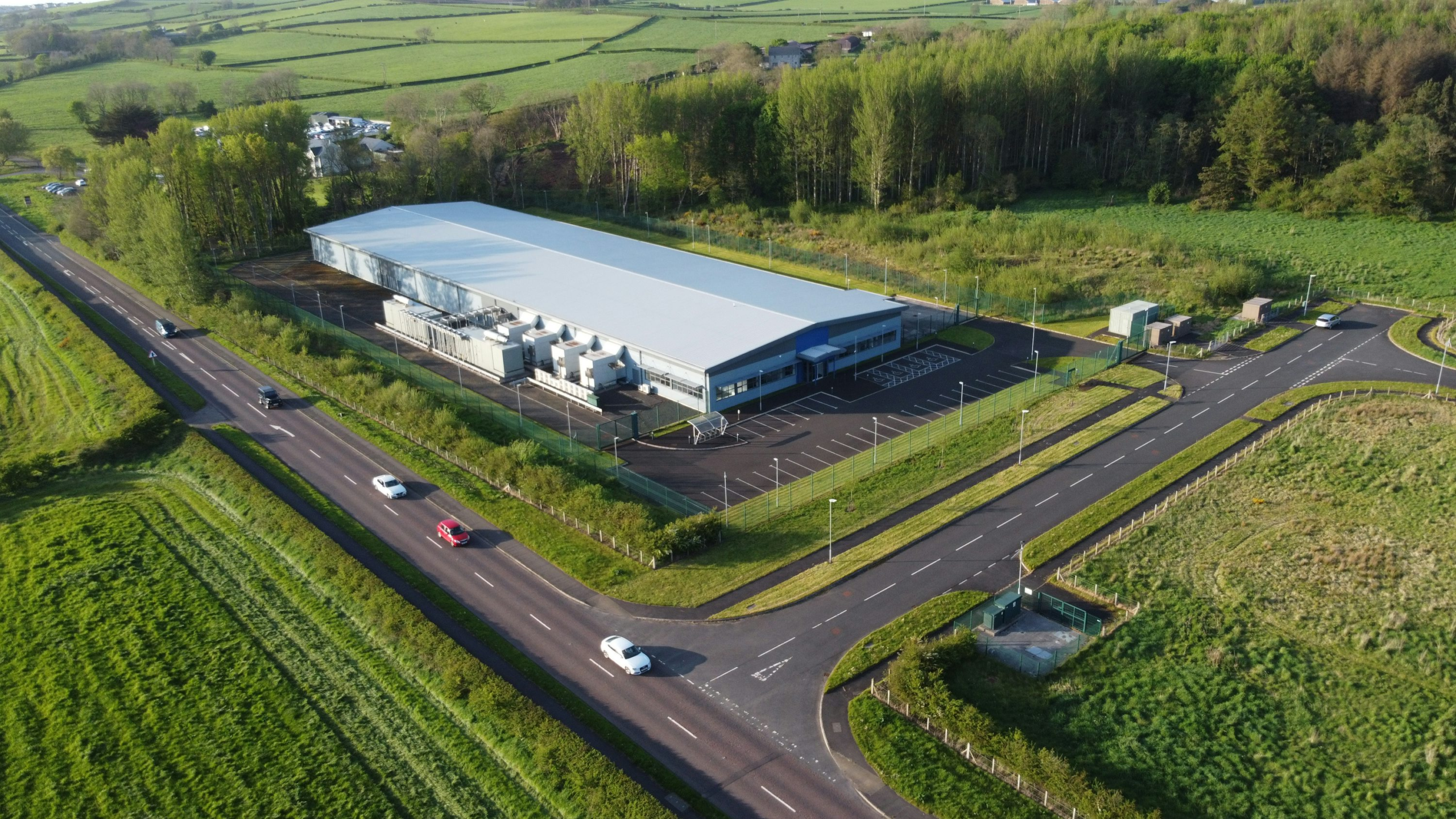
Summary
- Pioneer Acquisition I signed a proposed business combination with Stockholm-based Green AI Cloud on 8 October.
- The agreement values Green AI Cloud at $300m pre-money and anticipates a possible future Nasdaq listing.
- A proposed development pipeline is not funded or commissioned data centre capacity, and the transaction has not closed.
Stockholm-based AI infrastructure developer Green AI Cloud has agreed a proposed merger with Nasdaq-listed Pioneer Acquisition I Corp, proposing a potential route to the public markets for Swedish computing infrastructure projects. The definitive business combination agreement was disclosed in a US Securities and Exchange Commission filing dated 8 October.
The parties put a pre-money equity value of $300 million on Green AI Cloud. That is a negotiated transaction valuation, not money already raised to construct data centres and not a valuation independently tested by a completed public listing.
Transaction structure does not eliminate funding risk
The proposed combination is intended to result in Green AI Cloud becoming a publicly traded company. Completion is expected in the second quarter of 2027, subject to shareholder and other regulatory or transaction conditions. Any cash delivered to the business will depend on transaction completion, redemptions and the final financing arrangements.
The deal material describes a platform combining data centre development, renewable electricity sourcing and liquid-cooled AI computing. Those ambitions cover several stages of infrastructure delivery. A site that has a development plan or a prospective power position is not equivalent to an operating facility with commissioned accelerators and paying customers.
Because AI training clusters are capital intensive, a listed-company structure may give the developer access to additional fundraising options. It does not, however, ensure that the cost of land, substations, cooling, hardware or fibre connections is covered. The financing plan should be assessed separately from any headline multi-gigawatt development pipeline.
Power and heat claims need operational evidence
Green AI Cloud presents renewable electricity supply and the recovery of computing heat as important parts of its design strategy. The filing discusses solar, hydro and wind power and proposes uses for recovered heat in industrial processes or district heating systems.
For a computing facility, power purchase arrangements, the physical grid connection and the timing of renewable generation each determine what it can operate. Matching electricity consumption with renewable energy purchases is not the same as receiving renewable electricity on a dedicated connection at every moment.
Heat recovery similarly depends on the temperatures available from the cooling system, a nearby network or industrial customer, and demand for useful thermal energy. The filing’s aspirations cannot be treated as demonstrated net-negative emissions at operating sites without independently measured outcomes and an agreed accounting boundary.
The parties describe projects in Sweden at differing stages of maturity. The key engineering evidence will come from site-level power agreements, facility construction progress and commissioned computing capacity, rather than a single portfolio capacity figure.
Pioneer is a special purpose acquisition company, which means the merger offers a different route to becoming publicly traded from a conventional initial public offering. Its shareholders are due to consider the proposed combination. The filing states that the boards of both businesses have approved the agreement, but this is distinct from shareholder approval or regulatory completion.
The parties indicate a pro forma enterprise valuation of roughly $525 million under a no-redemptions assumption. That differs from the $300 million pre-money equity valuation and does not quantify cash that will be available to pay construction invoices. A later registration statement should describe the transaction structure, financing assumptions and risks in greater detail.
The signed merger agreement is a material ownership and capital-market development. What happens next is conditional: shareholder votes, regulatory filings, transaction financing and any subsequent project-level construction contracts will determine how much of the proposed infrastructure progresses from pipeline into service.

