
Summary
- ZincFive and Spark I have agreed a business combination giving the combined company a pro forma enterprise value of about $752m.
- The transaction is expected to close in the second half of 2026, subject to approvals and closing conditions.
- The deal shows investor attention moving toward immediate power systems for data centres and AI infrastructure.
ZincFive plans to go public through a business combination with Spark I Acquisition Corporation, bringing a specialist nickel-zinc battery supplier into the public-market pipeline for data centre and AI infrastructure power systems.
The transaction gives the combined company a stated pro forma enterprise value of about $752m. Spark I will domesticate from the Cayman Islands to Delaware and is expected to be renamed New ZincFive, Inc. after closing, with the company targeting a Nasdaq listing under the ticker ZFIV.
The deal includes preferred equity investment, common stock warrants, a minimum available cash condition, and shareholder approvals. Closing is expected in the second half of 2026, subject to registration statement effectiveness, domestication, listing approval, and other customary conditions.
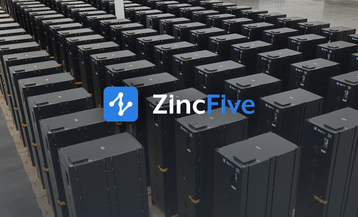
ZincFive provides nickel-zinc battery-based immediate power systems for mission-critical infrastructure. Its materials point to data centres, industrial operations, and AI-era infrastructure as target markets, with the company claiming nearly 2GW of systems contracted or deployed and a backlog supported by rising data centre demand.
Critical power is attracting capital
AI infrastructure demand is widening the investment lens around data centres. Capital is not only chasing land, shells, cloud platforms, and chips. It is also moving toward the electrical systems that sit between the grid and the rack: UPS platforms, batteries, switchgear, transformers, busways, power electronics, controls, and monitoring.
Battery suppliers are part of that shift because immediate ride-through remains a core resilience requirement. Even where operators are examining grid flexibility, alternative backup architectures, or longer-duration storage, the basic duty is unforgiving. Power systems must behave predictably during disturbances, transfers, maintenance, and failures.
Nickel-zinc chemistry competes with lithium-ion, valve-regulated lead-acid, and other energy storage options. The commercial case depends on safety, space, discharge performance, lifecycle, maintenance, sustainability, supply availability, and integration with existing UPS infrastructure. Data centre buyers are conservative around critical power, but high-density AI deployments are forcing a fresh look at how much space, weight, runtime, and maintenance burden traditional systems require.
The transaction route also deserves scrutiny. A SPAC merger can give ZincFive access to public-market capital, but the preferred equity layer, cash condition, approvals, and regulatory filings still leave several steps before completion. The eventual registration materials should provide more detail on revenue quality, customer concentration, backlog, manufacturing capacity, margin profile, and technology risk.
Electrical equipment lead times are already shaping data centre delivery schedules. Operators and developers are competing for transformers, switchgear, generators, UPS equipment, cooling systems, and specialist labour. Battery suppliers with proven products and credible manufacturing capacity may therefore attract more strategic and financial attention.
ZincFive’s planned listing places immediate power systems closer to the centre of the AI infrastructure finance discussion. The next useful evidence will come from transaction filings, customer disclosures where available, production capacity detail, and how the company plans to fund growth after the combination closes.

