
Summary
- ENGIE could become Google's preferred energy supply and management partner for the proposed French campus.
- The companies will assess renewable generation, grid flexibility, battery storage, and possible local heat recovery.
- The development remains subject to public consultation, with no final energy supply agreement or confirmed construction commitment.
ENGIE and Google have agreed to examine electricity supply and energy infrastructure arrangements for Google’s proposed data centre campus near Châteauroux in central France, including renewable generation, battery storage, and measures to support the electricity grid.
The memorandum of understanding, signed on 13 November, could lead to ENGIE becoming Google’s preferred energy supply and management partner for the development. The arrangement remains exploratory, with implementation dependent on subsequent commercial agreements and the progress of the data centre itself.
The companies will assess three areas: developing additional clean electricity generation, integrating the proposed facility into the power system, and improving local energy infrastructure. Potential measures include utility-scale and behind-the-meter battery storage, building efficiency improvements, electric vehicle charging, and recovery of heat from the computing equipment.
Google’s proposed campus would occupy approximately 200 hectares within the Ozans development area at Étrechet, east of Châteauroux. Current consultation documents describe a phased scheme comprising six to eight data centre buildings, potentially developed over 10 to 20 years.
The first building is envisaged around 2030, supplied through a proposed 225kV grid connection with 120MW of capacity. Later phases would require additional transmission infrastructure, including a 400kV connection initially designed for 300MW.
Those figures describe proposed electrical connections, not operating IT capacity. Neither the buildings nor their associated electricity infrastructure have been commissioned.
The development is undergoing public consultation organised under the supervision of France’s Commission nationale du débat public (CNDP). Google and transmission operator RTE are responsible for their respective elements of the project, with consultation scheduled to continue until 10 January 2027.
ENGIE’s proposed involvement introduces another element into an already substantial infrastructure programme. RTE is responsible for developing the necessary grid connections, while ENGIE could help Google assemble electricity procurement arrangements and investigate generation, storage, and flexibility options.
Matching electricity supply with computing demand
The companies intend to examine a portfolio of clean electricity generation technologies and renewable procurement arrangements at national scale. ENGIE says the objective is to support Google’s additional demand without contributing to higher electricity prices for households or businesses.
That objective has not yet been supported by a published generation portfolio, electricity price assessment, or detailed procurement contract. The commercial terms and physical assets needed to achieve it remain under consideration.
Large computing facilities can place substantial continuous demand on electricity systems. Renewable generation contracts may help secure the energy required over a year, but the timing of generation must also be considered because solar and wind output varies with weather conditions.
Electricity purchased through a long-term agreement does not necessarily arrive at the same hour that a data centre consumes it. The operator must therefore rely on the wider power system, storage, other generation, or adjustments to demand when contracted renewable output is insufficient.
ENGIE and Google will assess utility-scale batteries and storage installed behind the meter. The former can participate in wider electricity system services, while the latter can be designed around a particular site’s connection and operating requirements.
Storage may help manage short-term differences between generation and consumption, but its usefulness depends on energy capacity, discharge duration, power rating, and charging arrangements. No battery specifications or investment commitments have been disclosed for Châteauroux.
There is also no confirmed agreement covering how much computing demand could be adjusted in response to electricity system conditions. Some workloads can potentially be scheduled around periods of constrained supply, while others must remain available continuously.
Any demand flexibility programme would consequently need to distinguish computing activities that can tolerate temporary adjustments from services requiring uninterrupted operation.
Grid connections and local energy systems
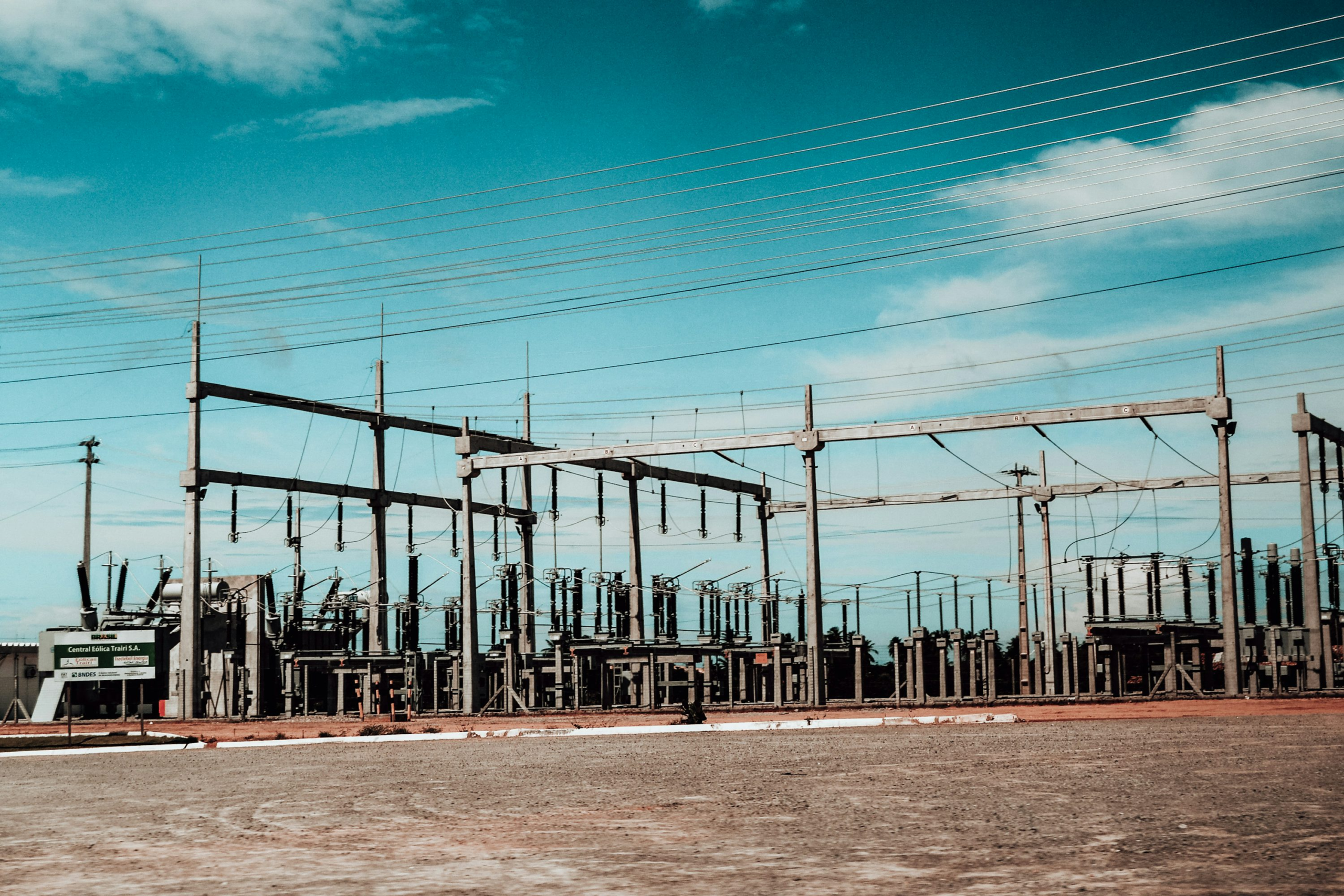
The proposed campus requires substantial transmission infrastructure independently of the arrangements being discussed with ENGIE. The first phase would involve a dedicated 225kV connection, while subsequent buildings would depend on additional high-voltage infrastructure developed by RTE.
Current consultation documents describe a second connection involving 400kV equipment and approximately 10 kilometres of overhead lines. Longer-term electrical requirements would depend on the pace of campus expansion and subsequent network development.
ENGIE and Google will also examine whether heat recovered from the computing equipment could be supplied free of charge to district heating networks or other local customers.
Computing equipment converts most of the electricity it consumes into heat. Recovering that energy can reduce the need for separate heat generation elsewhere, provided an appropriate local customer and distribution infrastructure are available.
Actual delivery would depend on coolant temperatures, heat exchanger arrangements, the receiving network’s operating conditions, and the availability of nearby demand. Heat pumps may be required where recovered energy is below the temperature needed by the receiving system.
The companies have not identified a contracted heat customer, an available heat quantity, or the investment required to establish such a connection.
Other potential local measures include improvements to the energy efficiency of buildings and development of electric vehicle charging infrastructure. No programme budgets, delivery responsibilities, or implementation dates have been specified.
ENGIE and Google already collaborate on clean energy arrangements in several markets. Their relationship includes a carbon-free energy management model developed in Germany in 2021, followed by work in Belgium, the United Kingdom, and the United States.
The Châteauroux agreement extends that relationship to the development of a proposed French data centre whose electrical requirements will depend on public consultation, network engineering, and subsequent investment decisions.
The immediate next steps involve assessing the feasibility of the proposed energy arrangements while Google and RTE continue the consultation process. A final energy agreement, confirmed construction programme, and delivery of the supporting electricity infrastructure remain outstanding.

