
Summary
- Analysts estimate data centre cooling demand can increase by 20–30% during extreme heat.
- Higher ambient temperatures reduce free cooling opportunities and increase the work required from chillers, pumps, fans, and heat rejection equipment.
- Drought can simultaneously restrict water availability and electricity generation, connecting facility cooling design more closely to grid resilience.
Data centre cooling demand can rise by 20–30% during periods of extreme heat, adding electrical load while high temperatures and drought are placing wider pressure on European power and water systems.
Analysts cited in European power market reporting estimate that cooling can account for a substantial share of facility electricity consumption and requires considerably more energy when outdoor conditions move beyond normal design temperatures. The precise increase varies with cooling architecture, location, IT density, humidity, and how efficiently heat can be rejected.
That relationship is being tested during a summer of exceptional heat and dryness. The Met Office recorded exceptional warmth and historic dryness across parts of the UK in July, while drought and heat have also affected electricity and water conditions across mainland Europe.
Hotter air reduces the cooling margin
Almost all of the electricity consumed by IT equipment ultimately becomes heat. Whether a facility relies on air cooling, chilled water, direct liquid cooling, or a mixed architecture, that heat has to travel through the cooling chain and leave the building.
Cool weather can make that process easier. Economisers and free cooling allow some facilities to reject heat with little or no mechanical refrigeration for long periods, while liquid loops operating at relatively high temperatures can extend the range of external conditions in which compressors remain idle.
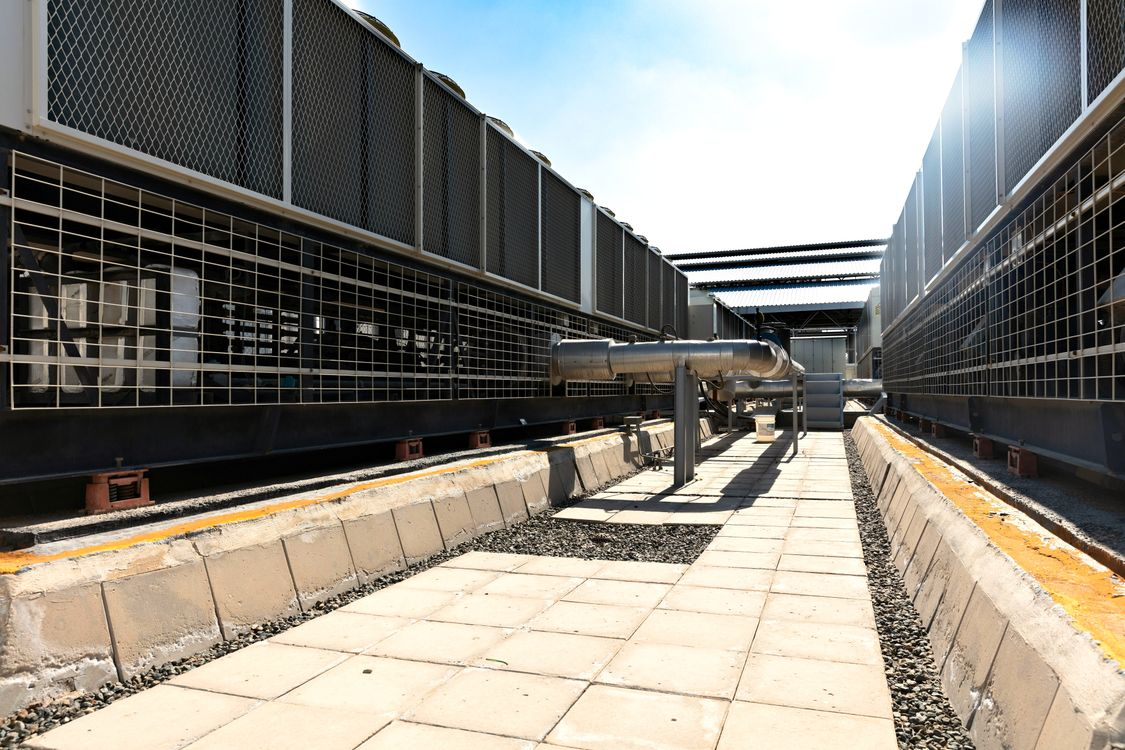
As ambient temperature rises, those operating windows narrow. Chillers work against a higher condensing temperature, fans and pumps can run harder, and dry coolers have less temperature difference available to transfer heat to the surrounding air.
A facility designed with generous plant capacity may absorb that change without approaching its operating limit, although its PUE can still deteriorate. Older sites, heavily occupied halls, or plants operating close to their design envelope have less margin when the weather and IT load peak together.
Higher rack densities raise the thermal concentration further. Direct to chip liquid cooling can move heat away from GPUs more efficiently than conventional air systems, but the energy still enters facility water loops before pumps, heat exchangers, dry coolers, cooling towers, or chillers reject it outside.
Water and electricity pressures can arrive together
Evaporative cooling creates a different trade-off. Water evaporation can reject heat efficiently and reduce electrical demand from refrigeration, but the process consumes water. During drought, the operating mode that offers lower electricity consumption can therefore increase reliance on the resource under greatest local pressure.
Dry cooling reduces direct water demand but may consume more electricity during the hottest periods. Hybrid plants can switch between modes, although their controls need to balance water availability, power prices, ambient conditions, and thermal resilience without allowing the IT environment to drift outside operating limits.
The surrounding power system is exposed to the same weather. High temperatures increase air conditioning load across homes and commercial buildings, while drought can reduce hydroelectric output and constrain some thermal generation where cooling water availability or river temperatures become limiting.
Low river levels can also disrupt fuel and equipment transport on major European waterways. Cooling demand inside a data centre therefore rises during conditions that can simultaneously reduce flexibility elsewhere in the energy system.
Water stress is moving into development decisions as well. Utilities and planning authorities are asking more detailed questions about peak demand, cooling mode, annual consumption, and whether projects can alter operations during drought. A design optimised only around annual PUE can miss the periods when local infrastructure is under the greatest pressure.
Extreme conditions test redundancy as well as efficiency
Thermal resilience depends on spare capacity. A cooling system may be designed to tolerate the loss of one or more components, but redundancy is only useful if the remaining plant can still carry the required load at peak ambient temperature.
Maintenance also becomes more difficult during prolonged heat. Taking a chiller, pump, or dry cooler offline can remove capacity just when demand is highest, forcing operators to shift maintenance windows or run with less redundancy than they would accept during cooler conditions.
AI halls increase the consequence of those decisions because each mechanical failure can expose a larger concentration of compute. Thermal response times can also be shorter where extremely dense racks are involved, making controls, monitoring, valves, pumps, and secondary loops part of the resilience chain rather than peripheral plant.
Design temperatures based on historical weather data may need closer examination as heatwaves become more frequent and severe. Facilities are expected to operate for decades, while the climate conditions encountered later in their life may exceed those used when original plant was sized.
The engineering response is not a single cooling technology. It is enough heat rejection capacity, realistic extreme weather modelling, resilient water and power arrangements, and controls capable of moving the plant between operating modes without losing thermal stability.
As Europe adds denser compute, heatwaves will increasingly expose the connection between server design and regional infrastructure. A hotter afternoon can translate directly into additional electrical demand at the facility boundary, precisely when the power and water systems outside are dealing with the same weather.

