
Summary
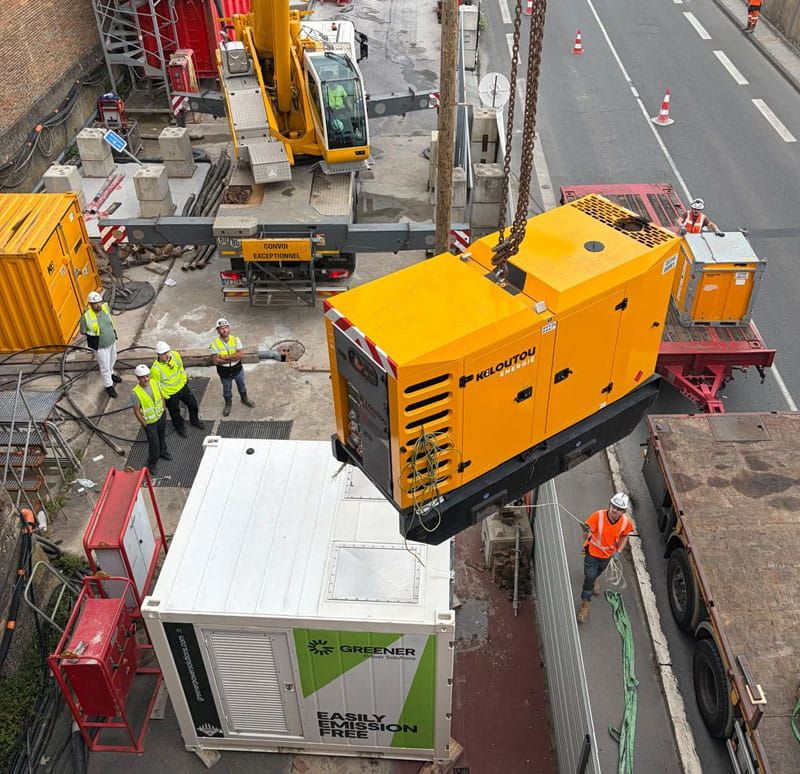
- A 422kWh battery system and 250kVA Stage V generator supply a data centre construction site near Paris without a permanent grid supply.
- Kiloutou reports an average 675 generator operating hours avoided monthly, alongside 2,279 litres of fuel and seven tonnes of CO₂.
- The figures are supplier-reported savings against a conventional generation scenario, not independently verified net cost or lifecycle emissions reductions.
French equipment supplier Kiloutou has reported average monthly diesel savings of 2,279 litres from a hybrid battery and generator system supplying temporary electricity to a data centre construction site in the Paris region.
The installation combines a battery system rated at 318kVA and 422kWh with a 250kVA Stage V diesel generator. According to Kiloutou Énergie, the equipment has reduced generator operating hours while maintaining supplies for construction equipment, pumps, security arrangements and temporary site facilities.
Figures published on 16 October indicate that the system avoids approximately 675 hours of generator operation each month compared with the supplier’s conventional generator-only scenario.
Kiloutou estimates associated monthly savings of seven tonnes of carbon dioxide and 38kg of nitrogen oxides. These values are based on its own telemetry and comparison methodology, rather than an independent audit of the installation’s complete environmental performance.
The system has been operating since mid-August at a site without an available electricity network connection. The temporary supply arrangement was originally expected to last approximately two months but is now due to continue until at least the end of 2026.
The company has not identified the construction project or its future data centre operator. It also has not disclosed the planned electrical load or computing capacity of the completed facility.
Battery storage changes generator operation
Construction sites commonly experience varying electrical demand as equipment is started, stopped or used intermittently. Other services, including lighting, pumps and security systems, may require electricity even when most construction activity has finished for the day.
Running a diesel generator continuously can result in extended periods at relatively low load. The relationship between fuel consumption and useful electricity output changes with engine loading, making generator operating strategy an important consideration where demand is variable.
At the French site, Kiloutou describes electricity demand as relatively moderate and consistent, with occasional higher loads from construction equipment. The battery supplies routine demand, allowing the generator to remain stopped for much of the time.
When additional power is needed or the battery requires charging, the generator can restart. It can then provide electricity directly, charge the battery or contribute to meeting higher loads according to the system’s control arrangements.
The 422kWh figure represents nominal stored energy, while the battery’s 318kVA rating describes apparent power capacity. Those specifications cannot be treated as interchangeable measurements.
The period for which the battery can support a given load depends on the usable stored energy, the power demanded and the system’s conversion losses. Kiloutou has not published a complete hourly load profile from which the site’s actual average demand or maximum electrical load can be independently calculated.
The generator’s 250kVA rating similarly identifies the equipment’s apparent power capacity, not the amount of electricity continuously consumed by the construction site.
Kiloutou packages the battery system in a ten-foot container. The company says the container weighs approximately 9.6 tonnes when empty, making delivery, lifting and positioning part of the installation planning.
The temporary electricity service also includes remote telemetry, scheduled fuel deliveries, telephone support and technical assistance available throughout the day and night.
These arrangements support continued operation of the temporary system, although they do not independently establish that the construction site has experienced no interruptions or that all future demand conditions can be met without changes to the equipment.
Supplier reports lower running costs
Kiloutou’s telemetry indicates approximately 675 generator operating hours avoided each month. The company describes this as equivalent to the battery supporting the site for around 94% of the time.
That percentage concerns operating time rather than the proportion of electrical energy delivered by the battery. Energy supplied during generator operation can differ substantially from energy supplied during lower-load periods when the generator is stopped.
The supplier reports that the altered operating strategy reduces monthly consumption of non-road diesel, known in France as GNR, by approximately 2,279 litres compared with conventional continuous generation.
Using an indicative fuel price of approximately €2.50 per litre, Kiloutou values the avoided fuel expenditure at around €5,700 each month.
This is a gross fuel-cost comparison, not a complete independently verified saving from the hybrid installation. Renting the battery increases equipment costs, while transport, installation, maintenance and support arrangements may also influence the commercial result.
Kiloutou states that the fuel reduction more than compensates for the higher battery rental cost. However, the published case study does not provide a complete itemised cost comparison, so the overall net saving cannot be independently calculated from the available figures.
The environmental claims require similar qualification. The company attributes approximately seven tonnes of avoided monthly CO₂ emissions and 38kg of avoided nitrogen oxides to the lower diesel consumption.
Those estimates depend on the assumed conventional generation baseline and the emissions factors applied. They do not establish the complete lifecycle emissions of the battery, generator, transport arrangements and other equipment used in the temporary installation.
The Stage V designation applies to the generator’s engine emissions standard. It should not be interpreted as certification of the overall hybrid system’s carbon emissions or fuel efficiency.
Reduced engine operating hours can also lower noise exposure around a construction site, particularly during periods when the generator would otherwise be running overnight.
Kiloutou reports that the hybrid arrangement has made the site quieter, but it has not provided independently verified before-and-after acoustic measurements within the published case study.
Temporary power remains combustion-dependent
The battery does not eliminate the need for diesel generation. Electricity stored in the battery must first be supplied by another source, and this installation continues to use the generator to recharge storage and support higher electrical loads.
Energy is also lost during conversion and charging. The reported reduction in fuel consumption therefore comes from changing when and how the generator operates, rather than replacing diesel with a continuous zero-emission supply.
Temporary electricity arrangements can become an important part of data centre construction where permanent network connections are not yet available. Power may be needed for groundwork, drainage, temporary buildings, security and installation activity before the final electrical systems can be energised.
An extended construction schedule can also lengthen the period for which temporary power is required. At the French project, the revised arrangement is expected to continue through the end of the year, making ongoing fuel and equipment costs relevant to the construction budget.
The reported benefits cannot automatically be transferred to another site. Generator loading, battery capacity, operating hours and temporary demand all influence whether hybridisation delivers similar fuel and financial savings.
The completed data centre will require a separate assessment of its permanent power infrastructure and operating performance. Kiloutou’s case study concerns temporary construction electricity, not the future computing facility’s energy efficiency or emissions.

