
Summary
- The proposed KES acquisition would add European fluid management, commissioning, and load-testing capability to Vertiv.
- The Irish company operates across EMEA from hubs near Dublin and in Frankfurt.
- Liquid cooling is pushing specialist fluid preparation and validation deeper into the data centre lifecycle.
Vertiv has agreed to acquire Ireland-headquartered King Environmental Services, adding European fluid management, commissioning, and load-testing capability to its growing liquid-cooling services business.
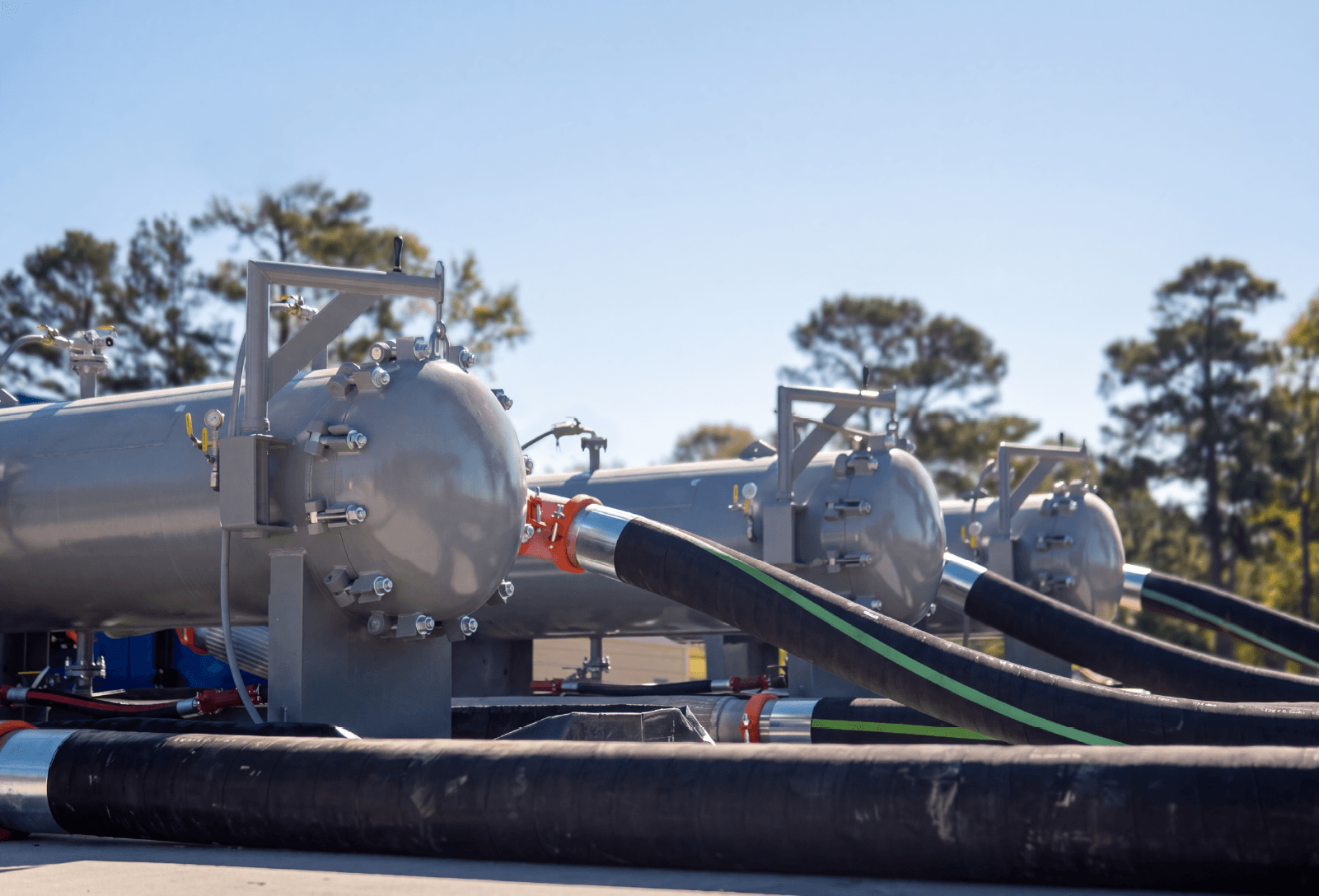
King Environmental Services, or KES, specialises in preparing, flushing, treating, testing, and validating fluid systems used in high-density data centres and other mission-critical facilities. The company is headquartered near Dublin and serves customers across Europe, the Middle East, and Africa, with operating hubs in North Dublin and Frankfurt.
Financial terms have not been disclosed. Vertiv expects the transaction to close in the fourth quarter of 2026 and said the acquisition is not expected to be material to its financial results.
The proposed acquisition would extend Vertiv’s thermal-management strategy beyond the equipment itself and further into the work required to make liquid-cooling systems function reliably once installed. KES provides pipework flushing, filtration, water treatment, testing, adjusting and balancing, data logging, thermography, and large-scale thermal and electrical load testing.
That puts the business at the boundary between construction and live operation. A cooling loop can be correctly specified on paper and still underperform if contamination, trapped air, poor water chemistry, corrosion, or unbalanced flow is introduced during installation or commissioning.
Liquid cooling creates a service problem as well as an equipment market
Direct-to-chip and other liquid-cooling systems are moving deeper into mainstream data centre design as rack densities rise. That change expands the number of fluid circuits, heat exchangers, coolant distribution units, manifolds, valves, connections, and control points that have to be commissioned and then maintained through the operating life of a site.
The engineering consequences are different from those associated with conventional air cooling. Fluid quality can affect heat-transfer efficiency, corrosion risk, equipment life, and ultimately uptime. Thermal infrastructure therefore has to be treated as an operating system rather than a collection of mechanical components handed over at practical completion.
KES also carries out thermal load testing of liquid-cooling infrastructure and electrical load testing of critical power systems. Those capabilities allow systems to be subjected to representative load before IT equipment is placed into production, reducing the gap between design assumptions and actual operating conditions.
Vertiv has been building this part of its services portfolio through acquisition. In December 2025 it bought PurgeRite, establishing a fluid-management operation in North America. KES is intended to provide corresponding execution capability in EMEA.
The combination also reflects a wider change in the cooling supply chain. Equipment vendors are increasingly being asked to take responsibility across more of the thermal chain, from heat capture at the chip through distribution, heat rejection, commissioning, monitoring, and maintenance.
For operators, that creates the possibility of fewer hand-offs between cooling suppliers, mechanical contractors, commissioning specialists, and maintenance providers. It also concentrates more responsibility with large infrastructure vendors when problems occur.
KES was founded in 2002 and has developed specialist capabilities around fluid-system preparation and operational validation. Vertiv said it intends to combine those field teams with its broader thermal-management and services portfolio.
The transaction lands as liquid cooling shifts from a feature of isolated high-performance computing installations into a design requirement for a growing share of AI infrastructure. The equipment market is expanding quickly, but the operational challenge is following it: every additional liquid circuit has to remain clean, balanced, monitored, and maintainable long after the first racks are commissioned.

