
Summary
- YIT has signed an agreement to build the shell and core of XTX Markets’ third Kajaani data centre.
- Construction is due to begin in summer 2026, adding to two earlier YIT-delivered facilities at the same Finnish campus.
- The project extends a €1bn-plus compute programme by a UK trading firm building owned infrastructure for machine-learning workloads.
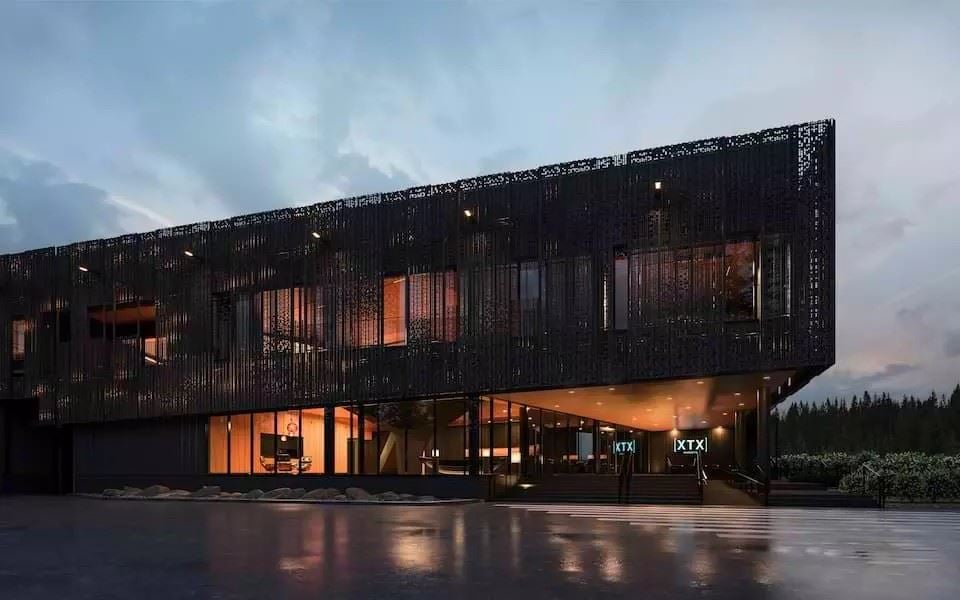
YIT has signed an agreement with XTX Markets to construct the shell and core of a third data centre at XTX’s Kajaani campus in Finland.
The Finnish construction group will act as main contractor, with work due to begin in summer 2026. The contract value has not been disclosed. YIT said the development forms part of XTX Markets’ plan to secure future computing capacity, after the London-headquartered algorithmic trading firm previously set out a programme to invest more than €1bn in a data centre campus in Kajaani.
The new contract extends an established relationship between the two companies. YIT previously delivered two data centres for XTX Markets in Kajaani, with the first facility agreed in 2024 and construction of the second beginning in 2025. The company’s investor update says the new data centre complex is part of XTX’s broader plan to secure future compute capacity.
YIT’s project reference for the first Kajaani data centre shows the kind of physical scope involved. That project covered roughly 15,000 square metres and included the data hall building, technical systems installation and testing, loading and office facilities, maintenance building, fire-water tanks, sprinkler pump building, fencing, gates, traffic areas, landscaping, and outdoor equipment. The third facility has not been described in the same detail, but the shell-and-core package points to another major construction phase rather than a minor fit-out.
XTX is not a hyperscaler, colocation provider, or public cloud operator. It is a financial markets business building substantial owned compute infrastructure for its own machine-learning requirements. Kajaani therefore sits within a broader shift in which advanced trading, AI research, and high-performance analytics are creating data centre demand beyond the usual cloud and colocation base.
Financial compute becomes concrete
XTX uses machine learning to produce price forecasts across financial instruments and to provide liquidity in global markets. That model depends on large volumes of compute, low-latency data processing, and the ability to scale hardware without being fully exposed to third-party cloud capacity, pricing, or deployment queues.
The Kajaani campus gives XTX more control over its compute base. It also exposes the firm directly to the realities of owning digital infrastructure: construction risk, energy strategy, equipment procurement, cooling design, maintenance, and long-term asset management. Compute becomes a balance-sheet infrastructure decision rather than only an external service.
Finland offers several ingredients for this type of project: cooler climate conditions, strong power-system credentials, a growing data centre construction base, and a regional development narrative attractive to high-density compute investors. Kajaani already has a technology and data centre profile, and YIT says XTX’s projects strengthen the city’s position as a digital infrastructure hub.
The project also lands during a tight supply-chain cycle for AI and HPC facilities. Shell and core may sound less technical than MEP fit-out, but getting the envelope, access, fire systems, service corridors, plant zones, and expansion logic right is critical. High-density data centres are unforgiving buildings. Civil and structural decisions can affect the cost and feasibility of later electrical and mechanical work.
Repeat delivery reduces friction
YIT’s role also reflects the growing value of specialist data centre construction capability. European demand is not limited by capital alone. It is constrained by experienced contractors, electrical specialists, cooling engineers, commissioning teams, and suppliers able to deliver quickly without weakening resilience.
The Kajaani programme gives YIT a repeat-customer campus project with a demanding compute user. That can be more valuable than a single contract, because repeat delivery allows the contractor and client to refine design, procurement, phasing, and construction lessons across multiple buildings. For XTX, it reduces interface risk with a construction partner already familiar with the site and technical expectations.
The third Kajaani data centre also sits near a separate infrastructure pressure point for XTX: server procurement. Financial News reported that XTX has sued Dell in Ireland over an alleged attempt to increase the price of a major server order for the Kajaani complex. That dispute is separate from the YIT contract, and deliveries were reported to be continuing, but it underlines how data centre development now spans both real estate delivery and hardware supply-chain exposure.
The project shows a non-hyperscale, compute-intensive European business building its own infrastructure estate at serious scale, in a market where power, construction capability, and hardware procurement all sit on the critical path.
The next details to watch are the building’s power envelope, cooling strategy, commissioning timetable, and any further campus expansion beyond the three facilities already tied to YIT. Kajaani is becoming a clear example of machine-learning demand turning financial infrastructure into physical data centre development.

